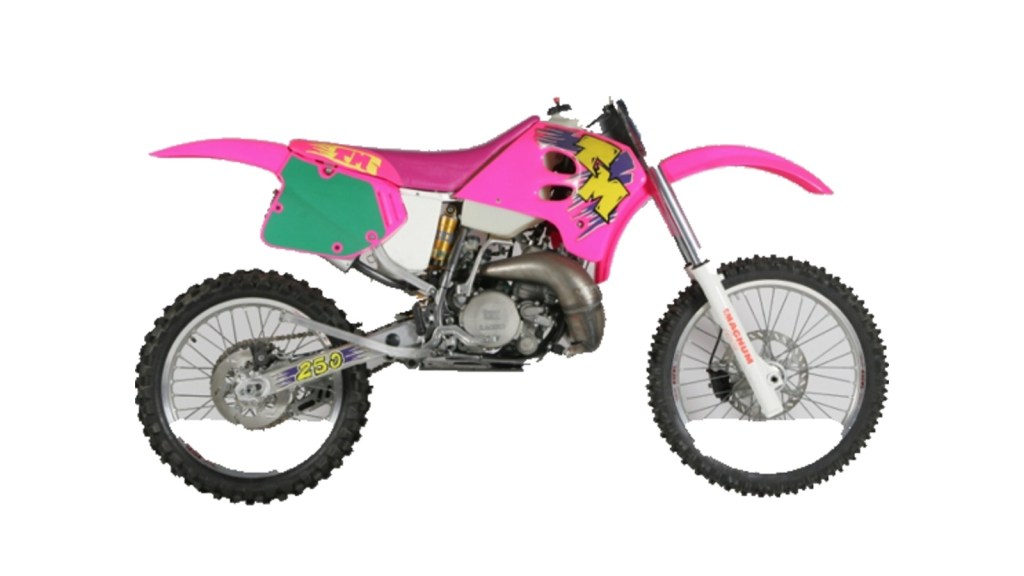
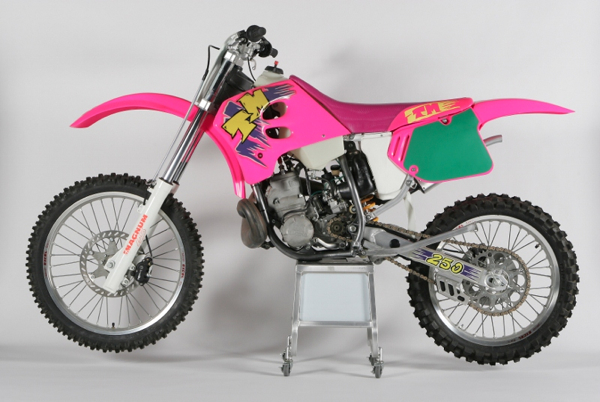
This week’s selection from Greg Primm’s Classic Steel is a rare bird indeed, the 1994 TM 250 Cross.
TM is what is known as a boutique manufacturer. The Italian company specializes in building a small number of motorcycles for a premium price. Their entire yearly run of TM motorcycles is probably smaller than Honda’s weekly run of CRF50s. Of course, being small has its advantages. Because TM is focused on only one thing, it can devote all of its resources to making the absolute best bike possible. The flip side of that laser focus is the fact that because they are so small, those resources are pretty limited. TM motorcycles are rare, exotic machines made for the rider who likes to stand apart from the crowd. It is a different kind of bike, for a different kind of rider.
TM rose to prominence in the eighties as a manufacturer of small two-stroke motors. While they did make small 80cc and 125cc motorcycles for the Italian market, it was their kart racing motors that made them famous. In the world of karting, TM was at the top of the heap in performance. From there, TM broadened their racing interests into ISDE off-road racing and eventually, motocross. By the mid-nineties, TM was looking to break into the lucrative US off-road market with a new line of no compromise race machines.
The 1994 TM250 Cross was an interesting mix of premium materials and cobby construction. Portions of the bike resembled works of art, while others looked to have been assembled in Luigi’s backyard. The TM employed premium components for things like the motor and suspension, while not shying away from using retreaded Japanese plastic molds the bodywork. The bike really was a study in contradiction.
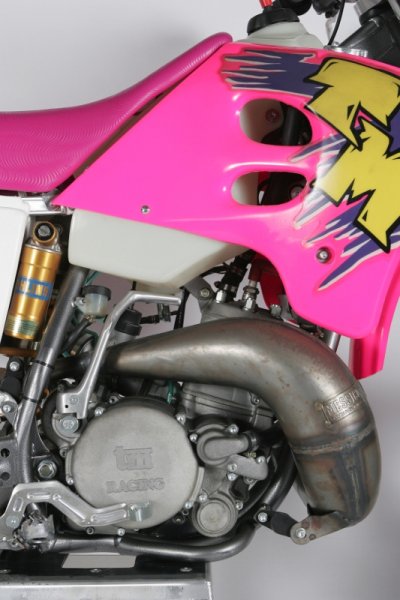
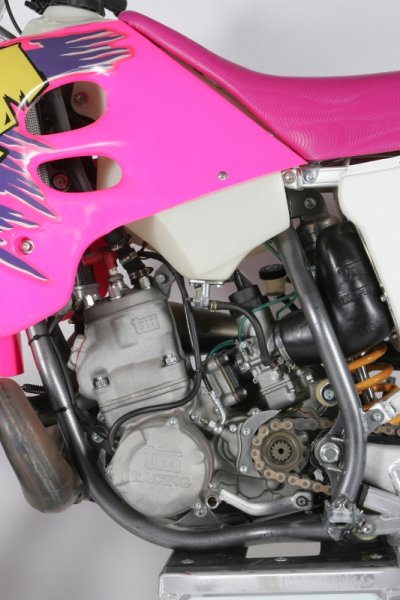
The ’94 TM’s 249cc motor was an Italian design, although it borrowed liberally from the Honda CR250R motors of the day. This was only the second year for TM’s 250 motocross program, so the bike was still a bit of a work in progress. The bore and stroke of the TM 250’s motor were taken directly from Honda’s CR250 (a CR250 piston was even interchangeable with the TM one). Even the clutch was interchangeable between the two machines. Considering the Honda was acknowledged to have the best motor at the time, it is little wonder TM used this as a jumping off point for their new machine. Where they differed was in the use of a case reed intake and a simpler power valve design. One of the really cool features on the TM was its early use of a hydraulic clutch. This was three years before KTM would add this feature to their bikes and a really trick item in 1994.
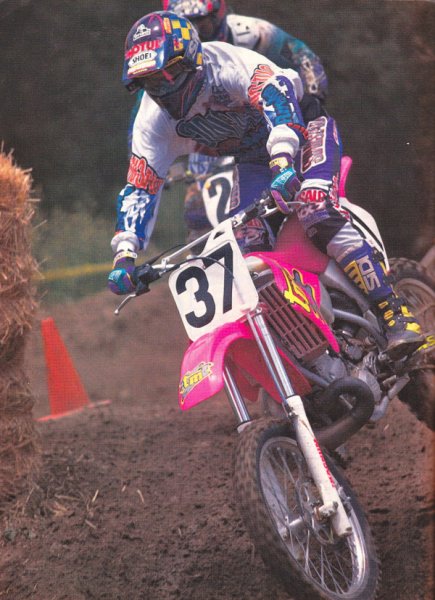
Perhaps the most curious part of the TM was the outlandish bodywork. It was certainly impossible to mistake the bike for anything else on the track with its eye-watering neon pink plastic. The plastic itself was an interesting mishmash of bodywork from other machines. Early TM’s came equipped with radiator shrouds and front fenders off of a ’93 RM combined with ’92 CR rear plastic. Later TM’s switched to using side panels and rear fenders from a ’94 KX (I actually think this looked way better on the bike). No matter which combination of bodywork you were lucky enough to get, it was always in florescent pink. Subtle the TM was not.
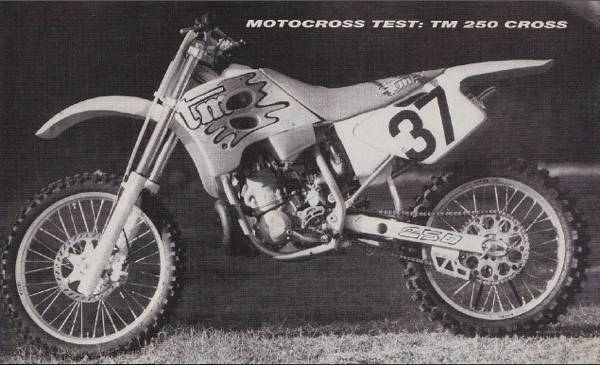
In the performance department, the TM was an absolute rocket in ’95. The karting heritage showed in a hard-hitting explosion of power that made the TM a handful to control. On pavement, all that power was a blessing, in the dirt, however, that blast of ponies was hard to use. Out of the hole, the case-reed mill was nothing special, but once into the midrange, it was all fire and brimstone. After the howitzer midrange, the TM would peter out and run out of go-juice as the revs climbed. The mid-range-only motor was fun to ride but difficult to use. The buttery smooth hydraulic clutch did help with keeping the explosive power slightly under control, however. On a perfectly groomed track, the bike was fast and effective, but as the track dried out, the TM became harder and harder to manage. The TM 250 motor was certainly competitive, but it could have used a little more refinement to compete with the best from Japan in 1994.
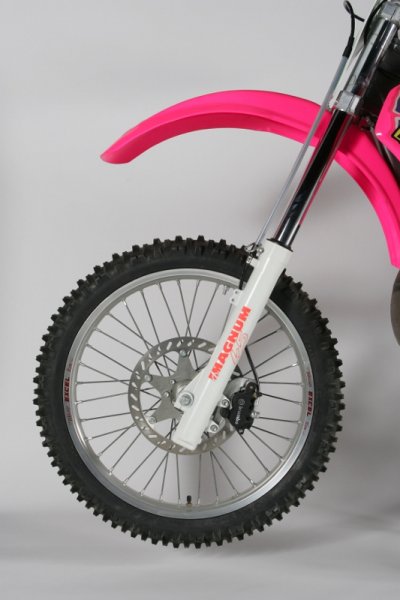
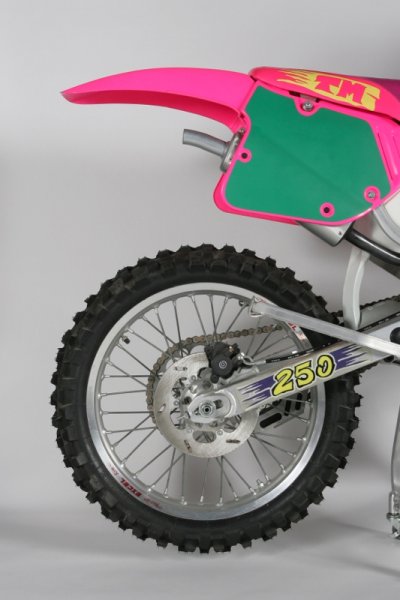
Suspension duties on the TM were handled by a Swedish Ohlins shock in the back and Italian Marzocchi forks up front. These were some of the best components available in ’94 and could be made to perform brilliantly with the right set up. The right-side-up Marzocchi forks were plush and soaked up everything on the track with aplomb. The only real problem with the forks was seal life, as they were known to eat fork seals faster than you could replace them. If you could keep the seals together, you had some of the best forks on the track. The Ohlins shock was not quite as plush as the front forks, but still better than average in performance. It provided good bump absorption and solid bottoming resistance over jumps. An occasional tendency to kick in braking bumps was the only real complaints heard about the Swedish shock.
As for handing, the Italian TM was typical of most Euro bikes of the time. That meant stable as a freight train at speed and none too enthusiastic to change direction in the turns. The long-feeling bike preferred to be slid around the outside, rather than steered to the inside in turns. While not very nimble, the TM was magic on long rough straights that would have an RM or CR owner saying Hail Mary’s by third gear. The excellent suspension helped here as well and made the TM a great bike for fast rough tracks like Glen Helen.
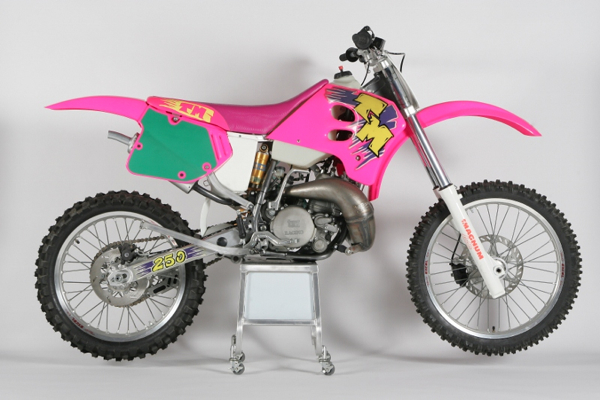
The 1994 TM 250 was certainly not a bike for everyone. The styling screamed “look at me” and at $6500, it was $1500 more expensive than its Japanese competitors. What that money did get you, however, was the excellent suspension, a rocket motor, and exclusivity. If you were the kind of guy who liked to march to the beat of a different drummer, the TM was just your kind of ride.
This story first ran in my Classic Steel column on PulpMX. Read the original at PulpMX.com.