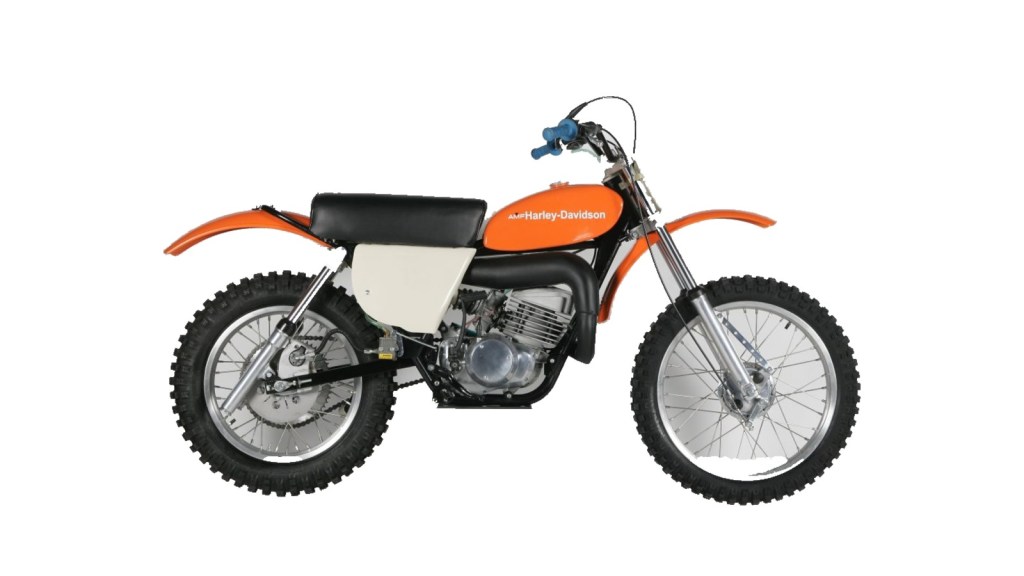
This week’s selection from Greg Primm’s Classic Steel is one of the more interesting bikes of the seventies, the 1975 Harley-Davidson MX-250.
When one thinks of motocross, Harley-Davidson is certainly not the first name that comes to mind. After all, the Milwaukee based motorcycle giant made its reputation on big V-twin cruisers, not dirt bikes. In reality, Harley-Davidson has put their name on all manner of two-wheeled machines over the years. Everything from small two-stroke runabouts to road racers have worn the black and orange shield at one time or another. One of these lesser-known endeavors was Harley’s brief flirtation with the motocross market. For a few turbulent years in the mid-seventies, the company known for chrome and ape hangers got its hands dirty and took on the established off-road manufacturers at their own game.
William Harley and Arthur Davidson originally founded Harley-Davidson in 1903 in Milwaukee, Wisconsin. Their first product was a small single cylinder machine of Davidson’s design that was closer to a moped than a motorcycle. From there, Harley-Davidson would continue to build more and more sophisticated designs, culminating in 1909 with their first V-twin motorcycle. Harley was in the right place at the right time, as America caught motorized fever in the early twentieth century. If it had a motor, people wanted it. With the economy booming in the 1920s, countless small manufacturers sprung up to meet the incredible demand for gas-powered machines of every type. Unfortunately, as the roaring twenties gave way to the turbulent thirties, all of that would change literally overnight. Of the dozens of early manufacturers that had sprung up, only Harley and Indian would survive the incredibly lean years of the Great Depression. As one of only two remaining American motorcycle manufacturers, Harley was in a perfect position to take advantage of the post-war boom years to come.
In 1960 Harley would purchase a half interest in the Italian firm Aeronatica-Macchi and form Aermacchi Harley–Davidson. The new division would produce small single cylinder motorcycles for the European and American market. The Aremacchi-Harley pairing would see the production of several small two-stroke singles throughout the sixties. The Italian made bikes wore the Harley shield but in reality, bore little resemblance to the big four-strokes people associated with the brand.
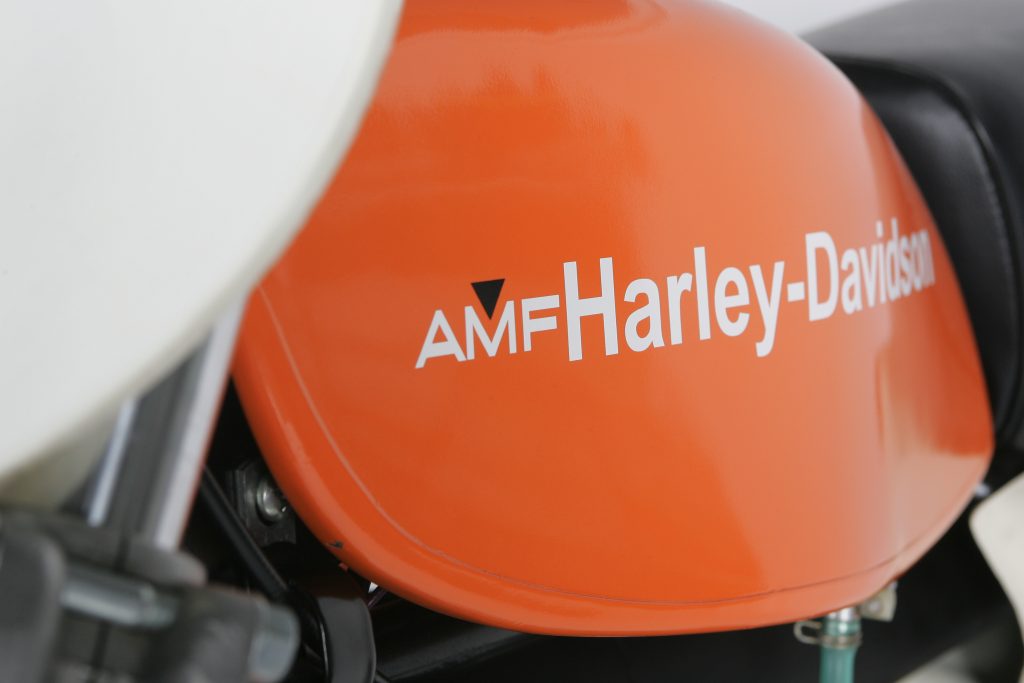
In 1969, American Machine and Foundry (AMF) bought Harley- Davidson, streamlined production and slashed the workforce. Labor strikes resulted from the workforce cuts, damaging the brand’s reputation and interrupting production. With falling sales and terrible quality, AMF/ Harley–Davidson became synonymous with poor performance and even poorer reliability during these difficult years. With sales on the decline and consumer confidence at an all-time low, Harley began looking at other ways to expand their business portfolio.
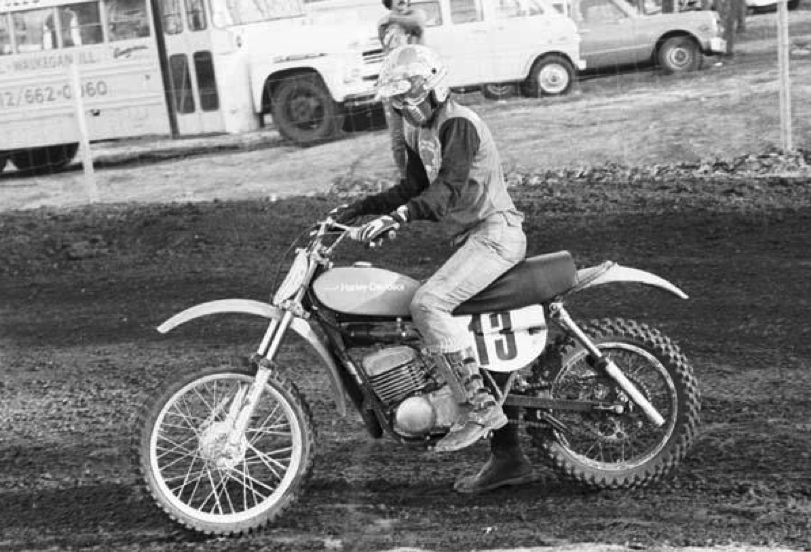
AMF/Harley was already producing a few small dirt bikes in the early seventies through the Aermacchi division. These small 100cc machines were primarily play bikes, designed for riding around in the desert. As the sport of motocross exploded in the early seventies, AMF decided that Harley should investigate making their own machine to compete in that potentially lucrative market. The result was one of the most memorable bikes of the decade, the 1975 MX-250.
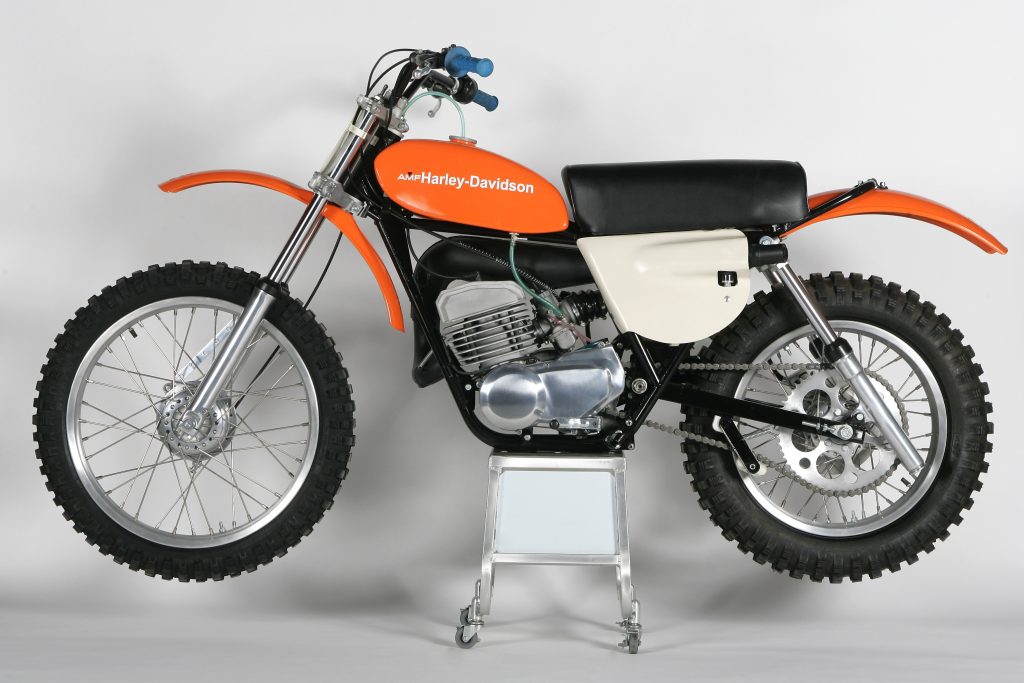
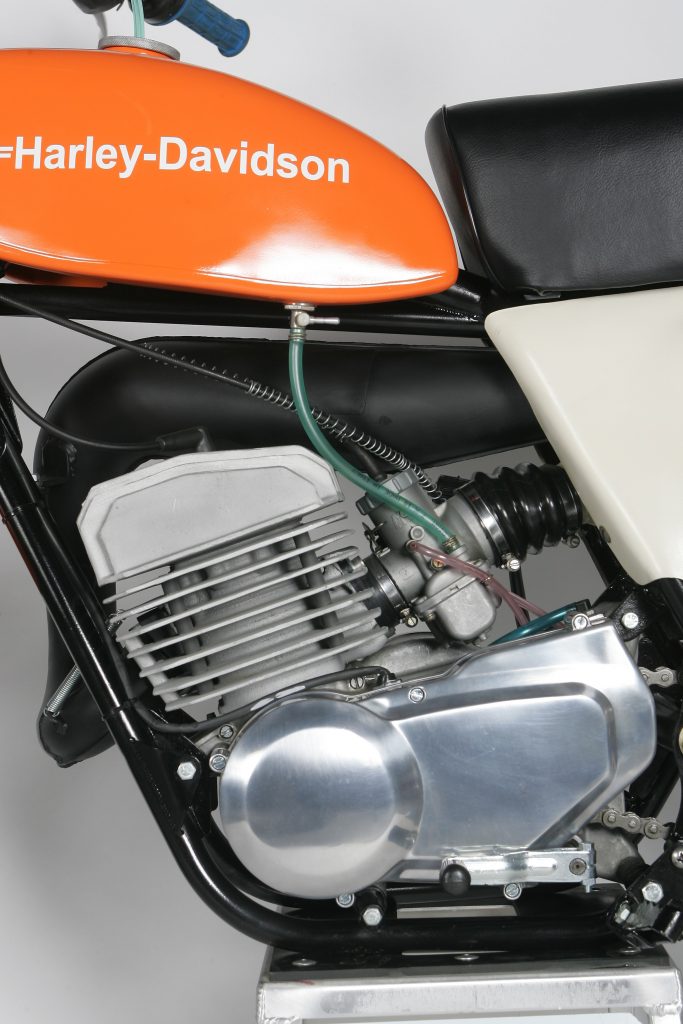
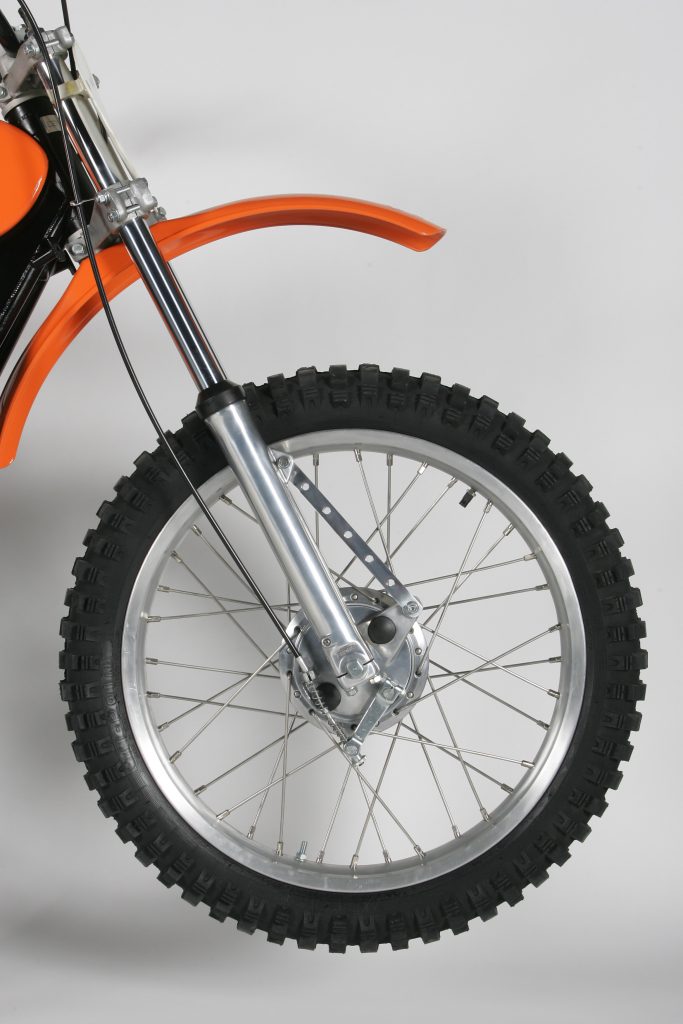
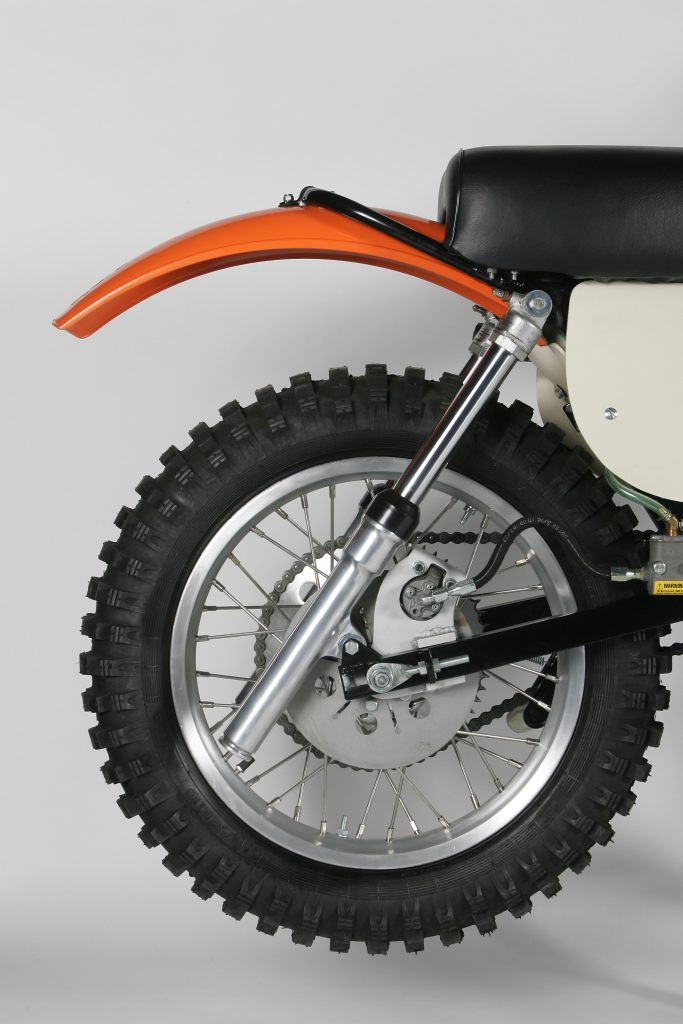
The MX-250 was a prototype machine made to gauge the practicality of AMF/Harley building a serious run of production motocrossers. It used a 242cc Aermacchi two-stroke single mated to a chromoly steel frame. The thing that really made this bike famous (or maybe infamous) was the odd suspension Harley chose for the machine. Harley decided to use front forks for both the front and rear suspension on the MX-250. Even stranger, they were not even from the same manufacturer. Showa produced the front forks, while Kayaba built the rears. It was an odd arrangement in every possible way. At the time there may have been some logic to the crazy rear fork idea. Motocross suspension was still in its infancy in the seventies and it was generally felt that fork performance was markedly superior to shock performance at the time. I suppose it seemed like a logical (if ridiculous looking) idea to just bolt the best components on both ends of the bike.
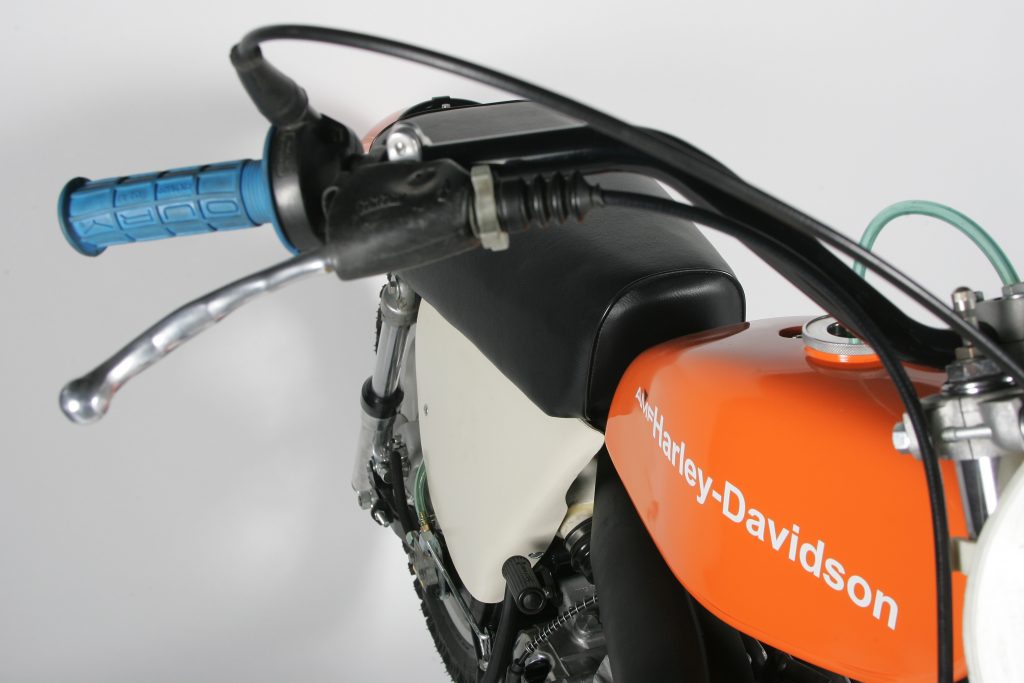
Another interesting feature of the MX-250 was the use of a rear disc brake. This was over a decade before this feature would make its way to motocross machines from Japan. The Airheart disc brake was unremarkable in performance and some people even removed it in favor of a Yamaha drum brake set up. The front wheel was a stock Yamaha front hub mated to Sun rims and Buchanan spokes. Magura provided the controls and K&N provided the handlebars. With American, German, Japanese and Italian parts, it really was a bit of a Frankenstein machine.
The performance of the bike was probably better than you would expect to look at the bike. The weird rear fork set up actually worked pretty well and did a decent job of smoothing out the bumps. The front Showa forks were likewise considered surprisingly good (by seventies standards of courses, which is not saying much). The Aeremacchi power plant was underpowered and better suited to an enduro bike, but it did prove reliable enough to take Bruce Ogilvie to the ’75 Baja 500 win on the MX-250. It would prove to be the only success the MX-250 would enjoy.
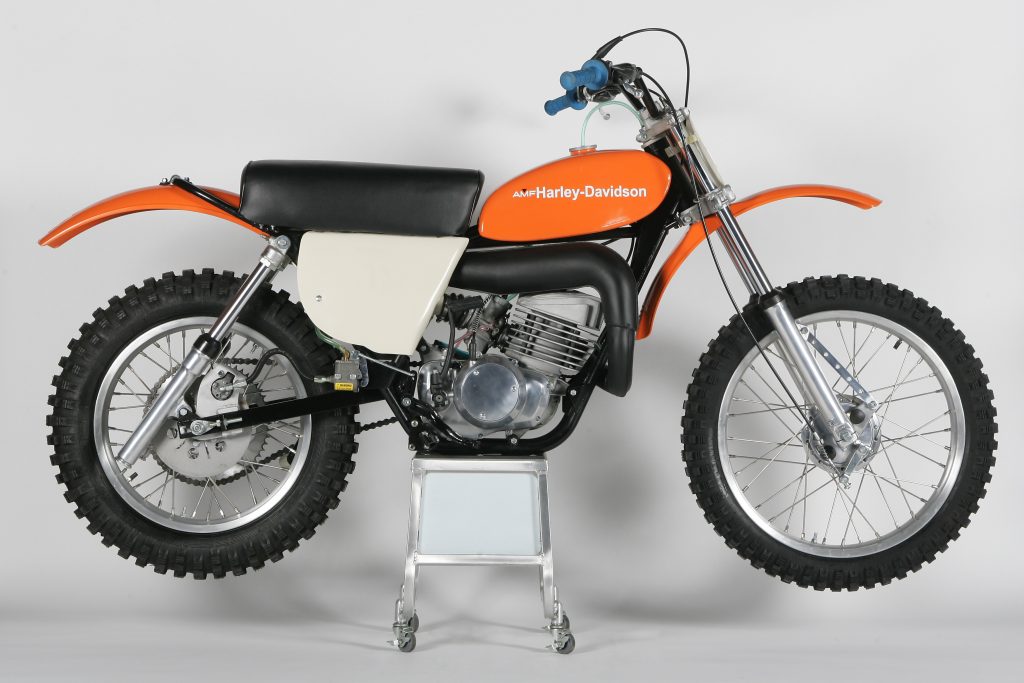
The AMF/ Harley-Davidson motocross experiment would be scrapped at the end of 1975 with only 65 of the machines ever having been produced. The underpowered engine and unproven chassis proved uncompetitive at motocross and AMF decided it would be best to go back to the drawing board with the project. They would come back in 1978 with a much-improved machine and several big-name riders to showcase the new bike. That effort would only last a short time as well, as Harley would give up on the off-road market for good in 1979. The 1975 MX-250 will forever remain an interesting footnote to the rocky AMF-Harley marriage of the seventies.
This story first ran in my Classic Steel column on PulpMX. Read the original at PulpMX.com.