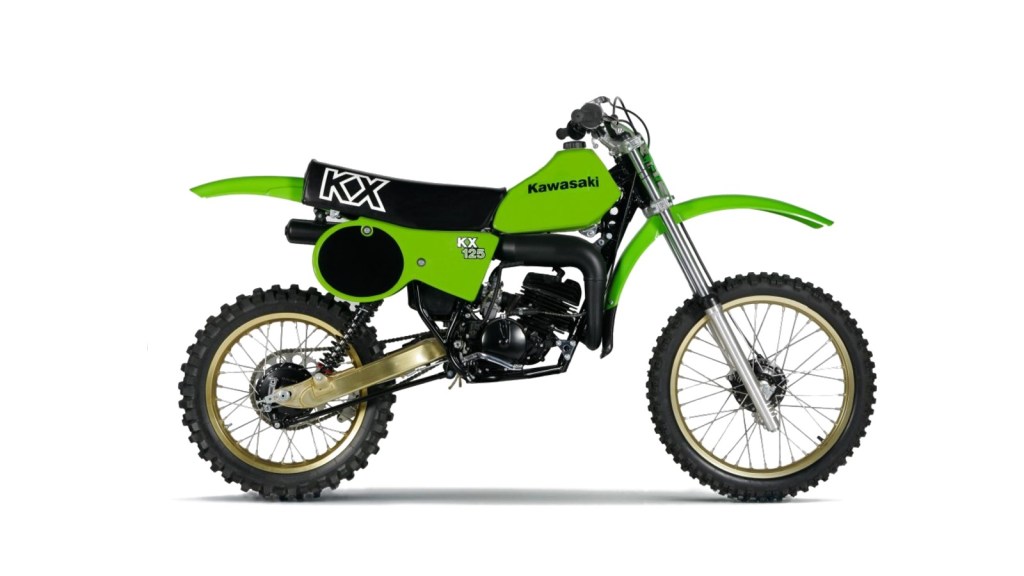
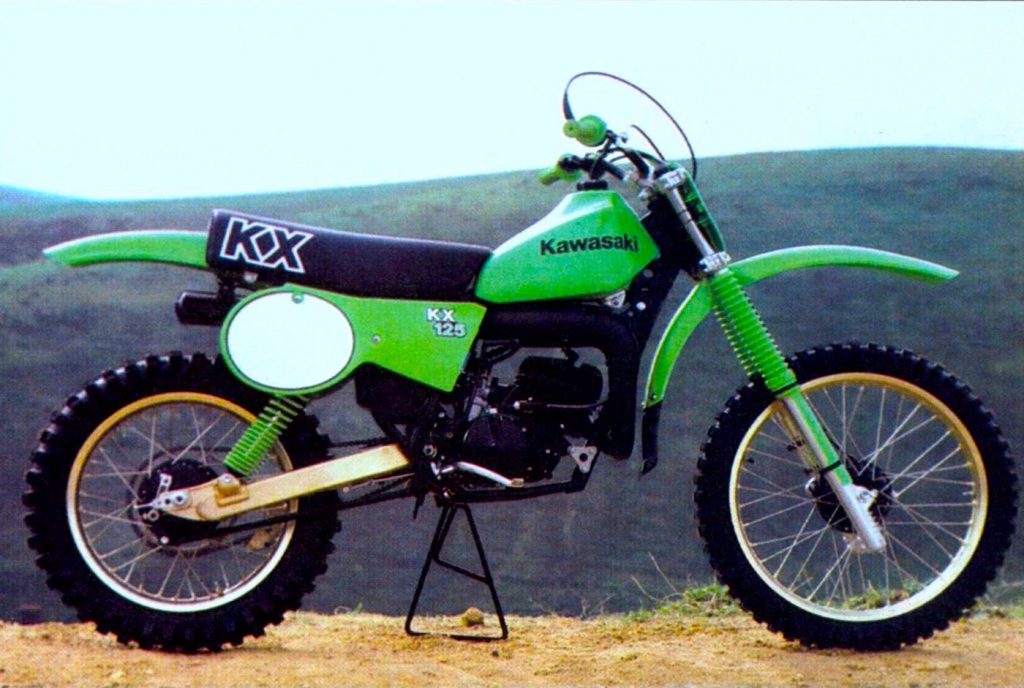
For this edition of Classic Steel we were going to take a look back at one of Kawasaki’s best early machines, the 1979 KX125A-5.
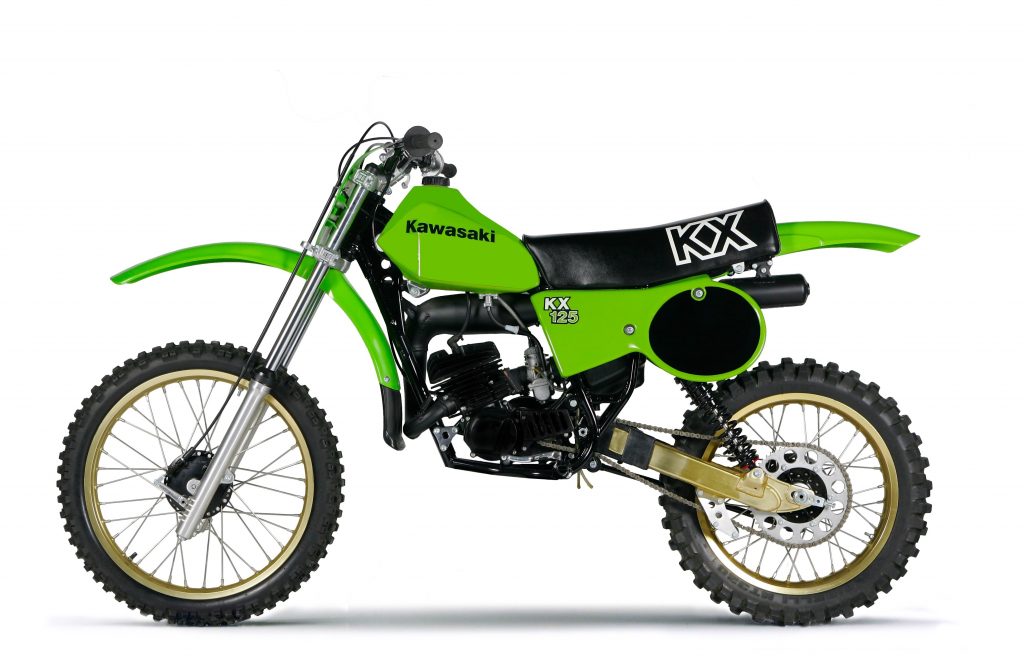
The seventies were an interesting time for Kawasaki. In the early part of the decade, they had produced some mildly successful off-road machines with their 100cc Centurion and 238cc Green Streak. Fast, but ill-handling, these early endeavors were not taken seriously as “real” motocross racers. Then in ’74, Kawasaki decided to jump into the deep end with a serious line of motocross racers of their own. The new KXs were Kawasaki’s attempt to carve out a slice of the burgeoning motocross market (and steal sales away from Honda’s runaway hit, the Elsinore). The new KX125 and KX250 turned out to be sub-par Elsinore clones in most respects and failed to make much of a dent in the off-road market. While Honda, Yamaha, and Suzuki plowed full-steam-ahead toward market domination, Kawasaki seemed content to focus mostly on street machines throughout the majority of the decade.
It was not until 1978 that Team Green started to take motocross seriously. In ’78, Kawasaki scrapped the original (and by now very outdated) ‘74-’76 KX125 design and introduced an all-new motocross machine. The ’78 KX125A-4 was a much more competitive machine than its predecessors had been. It featured a fast, but pipey, pro-oriented motor, and lightweight chassis. In truth, the A-4 proved little more than a marketing exercise for Kawasaki. The manufacturer only produced 1600 of the A-4’s in total, meaning that if you were Joe Average you had very little chance of obtaining an A-4. Still, with riders like “Gassin” Gaylon Mosier and Jimmy Weinert at the controls, the new KXs did receive a good deal of publicity in 1978. It would not be until a year later, in 1979, that Kawasaki would finally signal that they were indeed serious about the motocross market with a competitive machine for the masses.
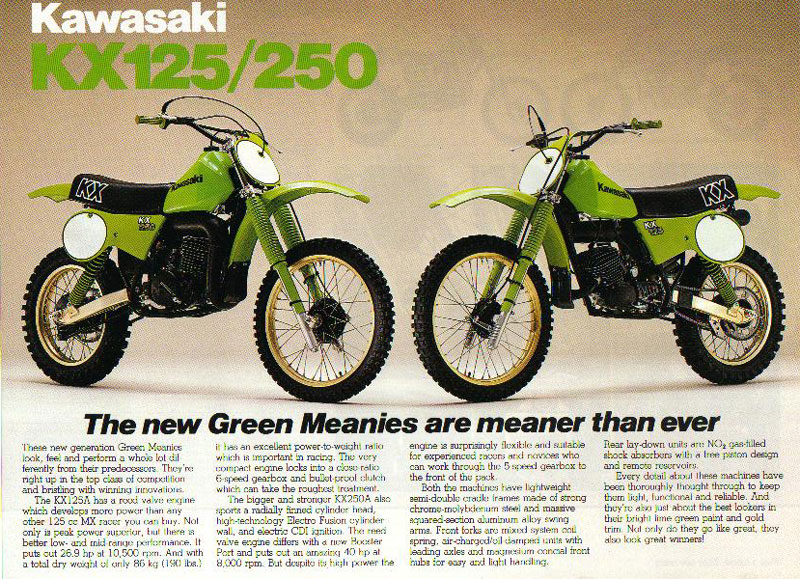
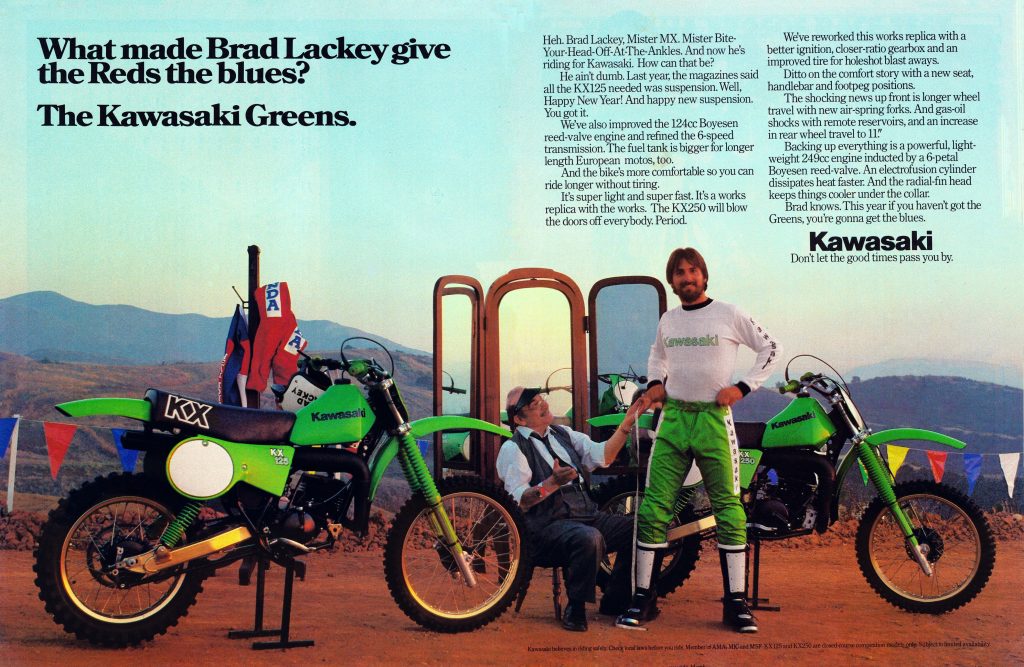
The all-new ’79 KX125A-5 was finally a Kawasaki 125 that could really stand up head-to-head with the best from Japan. It featured a high-tech motor (for its time), a lightweight chassis and slick GP-inspired bodywork to go with its new long-travel suspension. The ’79 KX was truly ready to race right out of the box, and best of all, it did not require you have connections at Kawasaki in Japan to have a shot at buying one.
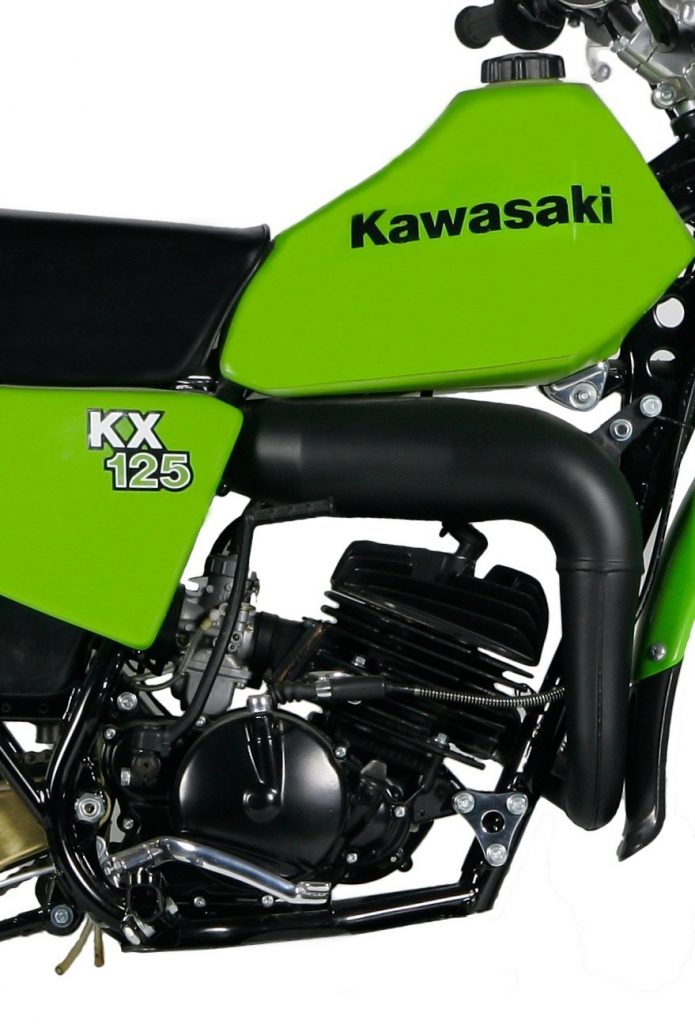
The A-5’s motor was considered remarkable for a 125 because of its broad, usable power curve. In the days before power-valves, very few 125s could actually be said to provide wide, easy-to-ride powerbands. Most were high-strung buzz bombs, which made all of their power over a very narrow range. In contrast, the A-5 produced a broad and torquey spread of power. Throttle response was particularly good, with a snappy delivery and none of the bog common to small bores at the time. Some of the credit for the KX125’s remarkable powerband probably went to its use of Boyesen’s excellent, dual stage reeds. At a time when most bikes were still using solid metal reeds, the new lightweight, dual-pedal Boyesen fiber reeds were a breakthrough in two-stroke performance. In ’79, Kawasaki licensed the use of Boyesen’s patented technology, and they were the only manufacturer to enjoy its benefits in power and response.
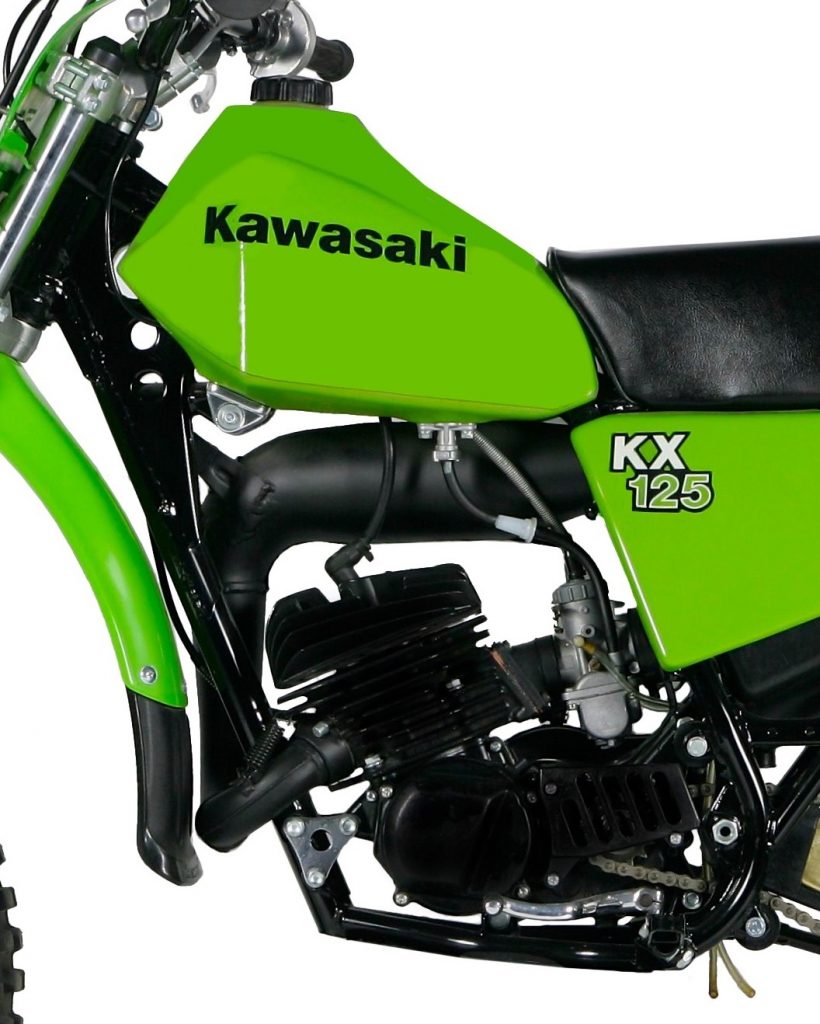
While the A-5’s motor was by far the easiest to use 125 in ’79, it was not completely without faults. The 124cc mill snapped to attention very low in the curve for a 125 and continued to pull into an excellent mid-range hit, but past that point, the little Green Meany petered out. Rather unlike most 125s, screaming the KX only resulted in more noise and less power. It was best to treat the A-5 like a big-bore, short shifting and using its excellent torque to blast you from turn to turn. Short shifting the transmission also aided in dealing with the KX’s true Achilles’ heel, its awful transmission.
The six-speed cog box in the A-5 was notchy under the best of conditions and useless under duress. It was completely impossible to powershift the KX under a load (never a good trait in a 125). The only way to execute a positive shift was to back off the gas completely and use the clutch. This was a massive handicap on starts and tricky upshifts, where backing out of the gas cost precious seconds on the track. In addition to being virtually worthless, the KX’s tranny was also fragile and many riders reported failures throughout the year. In the final motor standings of ’79, the KX125 lost out to the excellent RM, but it bested the lackluster YZ and lethargic CR handily.
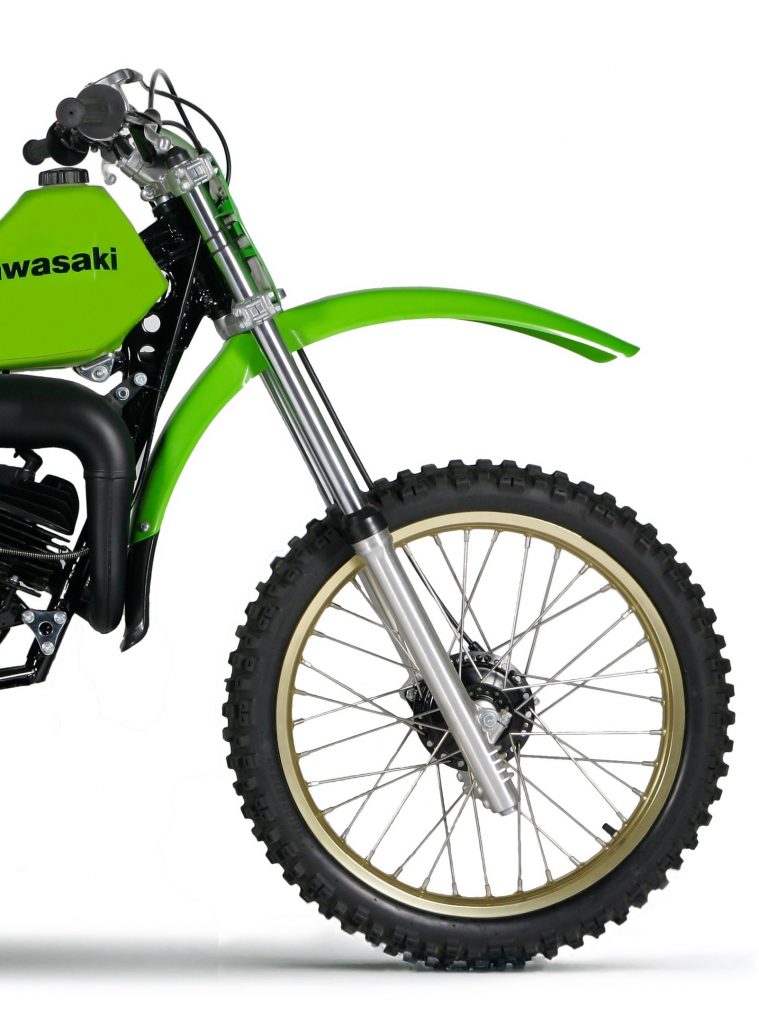
In 1979 the motocross world was knee deep in the middle of a suspension arms race. The quest for suspension supremacy was driving the manufacturers to extend the travel of their machines nearly every year. Up until ’79, Kawasaki had been behind in this battle, but the A-5 would herald the arrival of true long-travel suspension to the green machine. The new forks and shocks on the KX delivered nearly 10 inches of travel front and rear. That was short of the 11 inches offered by the Honda and Suzuki, but in line with the mono shock YZ in ’79. The KX’s Kayaba forks offered no external adjustments for damping, but the ride could be fine-tuned through the use of air pressure, oil viscosity and oil level.
In terms of actual performance, the KX’s forks were considered very good for their time. They were set up for faster riders, with heavy rate springs and aggressive damping. Slower or lighter riders found the ride too stiff, but with fine-tuning, they were acceptable for a wide range of pilots. In the ’79 suspension rankings, the Suzuki’s plush forks swept the field, with the Kawasaki coming in second. A close third was the Yamaha, with the positively terrible Honda bringing up the rear.
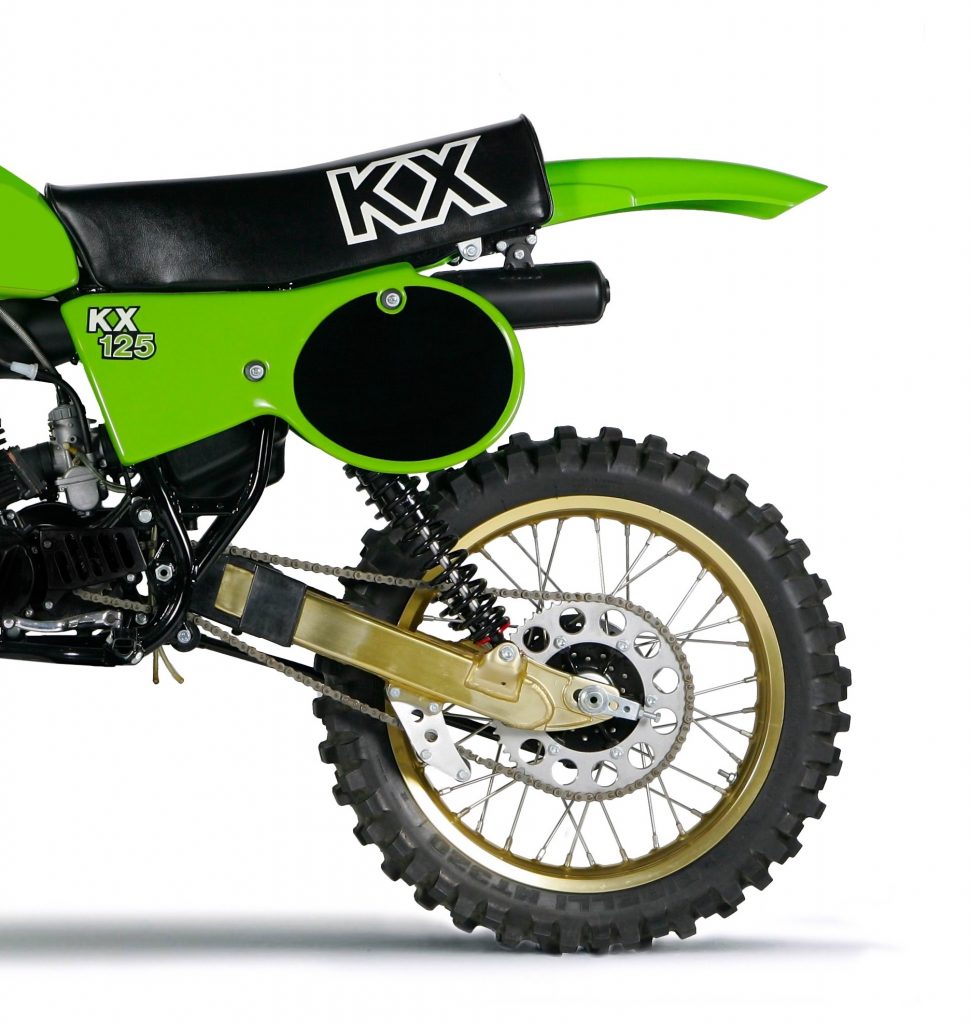
In the rear, the A-5 used twin Kayaba remote reservoir shocks punching out a total of 9.8 inches of travel. Like the forks, they featured no external adjustability save spring preload. The performance of the shocks was skewed toward faster riders as well, with stiff springs and damping. They were by no means plush, but they absorbed big hits well. In an era dominated by aftermarket shocks, the stock Kayaba’s were usable for the majority of riders. Only really fast riders, or those seeking more travel needed to go to aftermarket units on the KX. In terms of ranking, the KX once again finished behind the awesome Suzuki RM125, but well ahead of the too soft YZ and grim Honda.
In the detailing department, the little KX was one pretty cool machine (as long as you liked green that is). Lime green was everywhere on the bike, right down to its shock springs and stock grips. The grips in particular (while pretty trick) were not well liked by riders. They were large, and made of a very hard compound that shredded tender hands in short order. The A-5’s plastic tank and side panels were new for ’79 and closely resembled the ones on Kawasaki’s GP racers. While the brakes on the KX were by no means fantastic, they did an adequate job of slowing down the lightweight machine and were considered on par with other tiddler offerings in ’79. One nice feature on the KX was its big and sturdy gold anodized aluminum swingarm. It was flex free, and a big improvement over the flimsy steel units found on bikes like the Honda Elsinore.
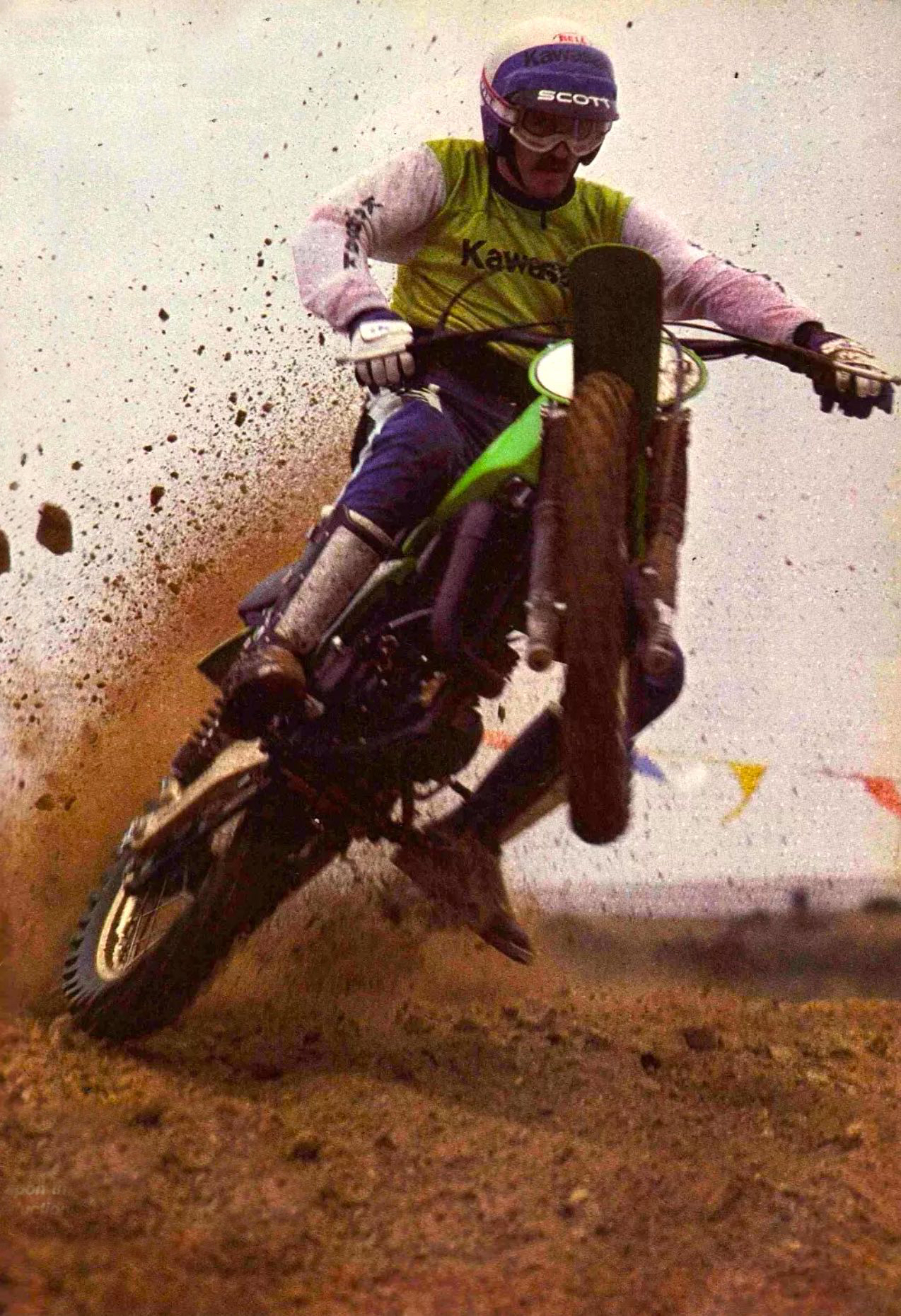
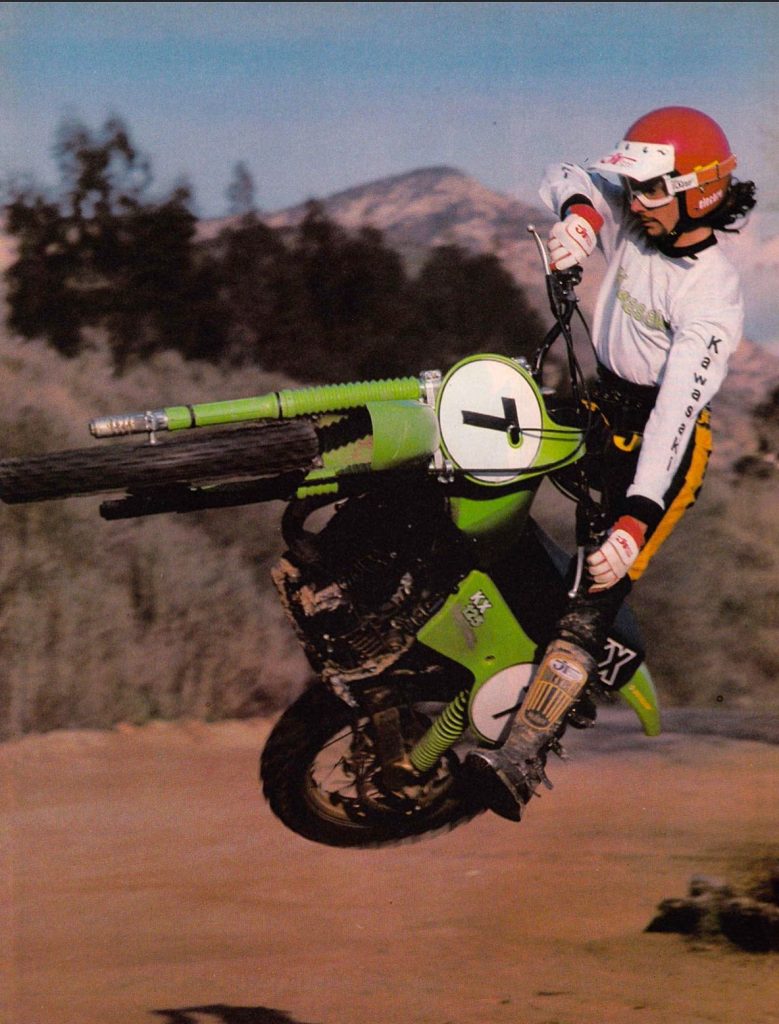
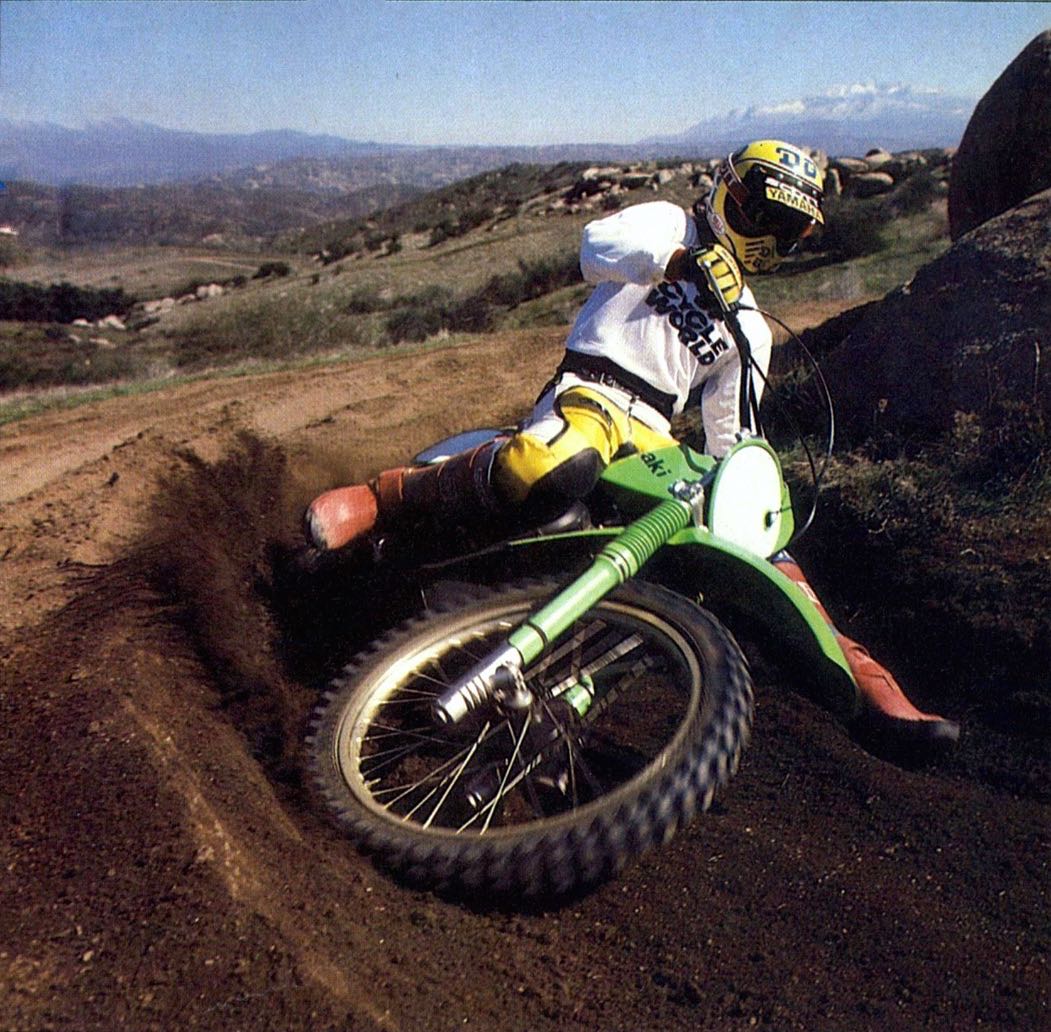
Another feature working in the A-5’s favor was its super light weight. The new KX tipped the scales at a featherweight 190 pounds. This, combined with its well-sorted suspension gave the bike a light and airy feel. The A-5 also sat a little over an inch lower than most of the other 125s in ’79 and was one of the few bikes that could be sat on flatfooted by riders under 5’9″. In the turns the KX had no equal, it could snag the inside or bounce off a berm with equal skill. The only real quibble with the KX’s chassis was its somewhat odd ergonomics. The foot pegs were placed high and several inches farther forward than on most other bikes. This was combined with low, rearward mounted bars to give the KX a very cramped riding compartment. The transition from sitting to standing was particularly difficult for riders with long legs. Since most 125 pilots tended to be smaller by nature, this was less of an issue than on bigger machines. Even so, the KX was definitely better suited to Jeff Ward than Mike Bell.
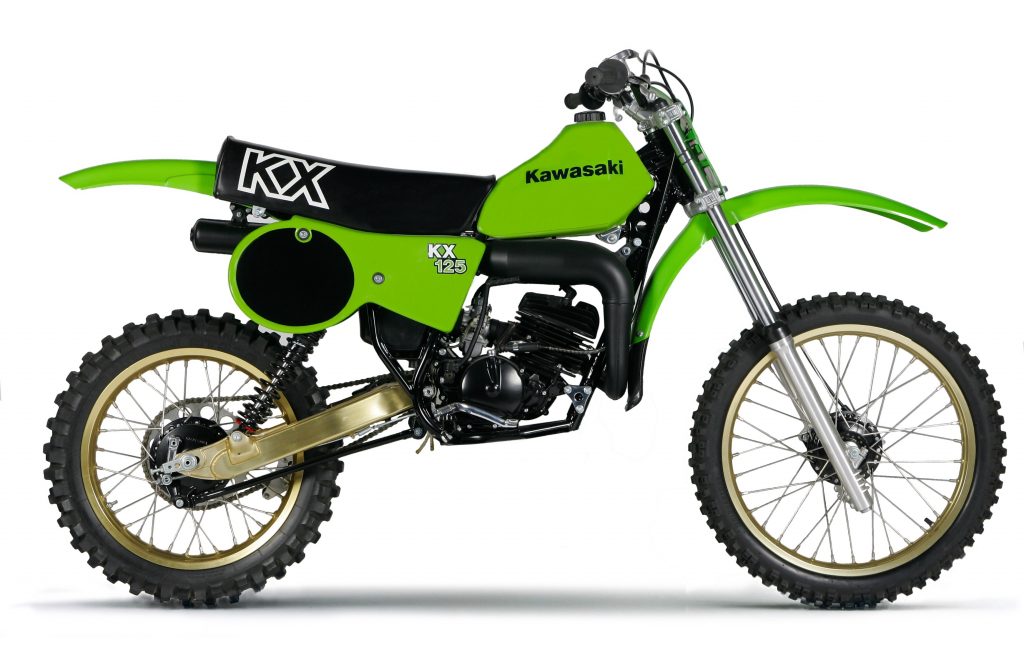
The ’79 KX125A-5 was the start of something big for Kawasaki. After years of lackluster off-road offerings, Team Green pulled out all the stops and produced a real 125 contender. The KX was a few details away from greatness in ’79, with its cranky gearbox and odd ergonomics. Still, it did get a lot right; the motor’s power was a match for anything in the class and the suspension was ready for the track right out of the box. The A-5 was a sign that Kawasaki was getting serious about the motocross market and within a very few years, they would be a legitimate contender in every class. Big things have little beginnings, and for Kawasaki, their great small bike legacy starts right here.
This story first ran in my Classic Steel column on PulpMX. Read the original at PulpMX.com.