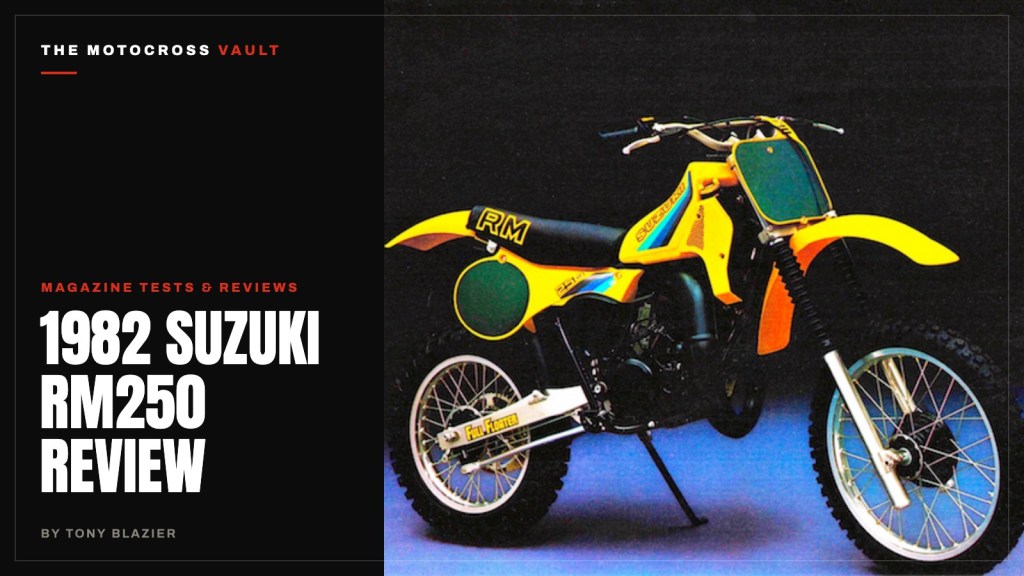
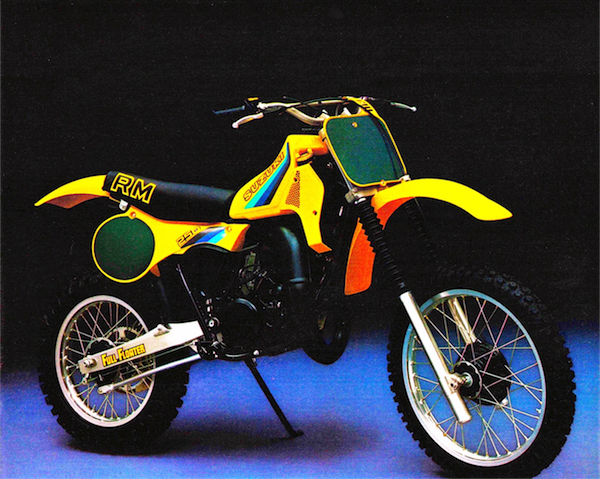
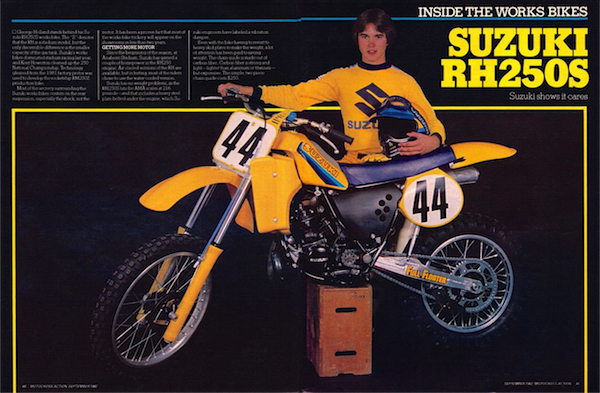
For this week’s GP’s Classic Steel we are going to take a look back the 1982 Suzuki RM250Z.
Today’s Suzuki is a mere shadow of the motocross powerhouse it once was. From the late sixties to the early eighties, the little brand from Hamamatsu Japan was arguably the most powerful force in motocross. Long before Honda had even produced its first motocross machine, Suzuki was racking up the World Motocross titles. Roger DeCoster, Joël Robert, Gaston Rahier, Akira Watanabe, Harry Everts and Georges Jobé all brought home gold for Suzuki during this golden age of Grand Prix motocross.
While their works machines were the best on the track in the early seventies, their production machines left a lot to be desired. Early TM’s were pathetic in most all respects and virtually worthless on a motocross track. Thankfully, all that changed in 1975 with the introduction of the all-new RM series. The RM125, and later RM250 and RM370, were true works replicas and ready to race right out of the crate. After a rough start with the first TM’s, Suzuki had a major hit on their hands with the spectacular RM’s.
From its very introduction in 1975, the RM250’s biggest advantage over the competition had been its excellent suspension. In an era where bikes with three and four inches of travel were common, the RM came equipped with nearly double that amount of movement. Even as the other manufacturers upped the ante and moved toward a full foot of movement in the late seventies, Suzuki continued to maintain its lead by delivering the right kind of travel.
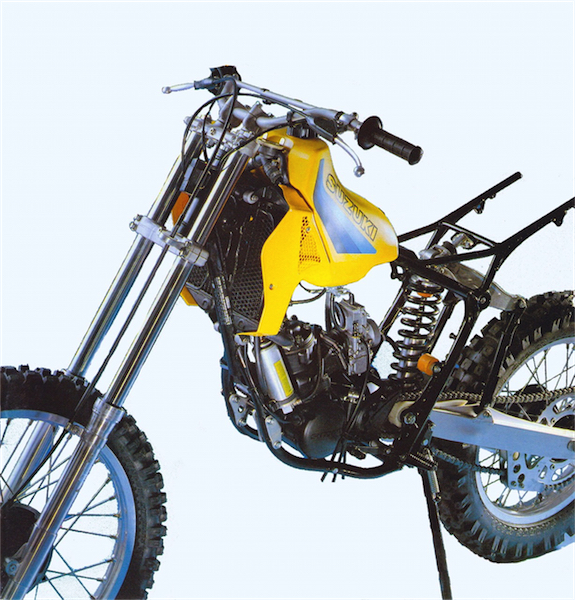
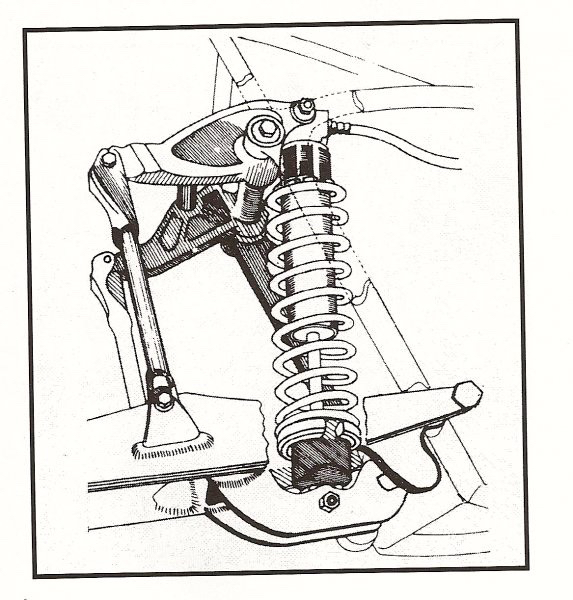
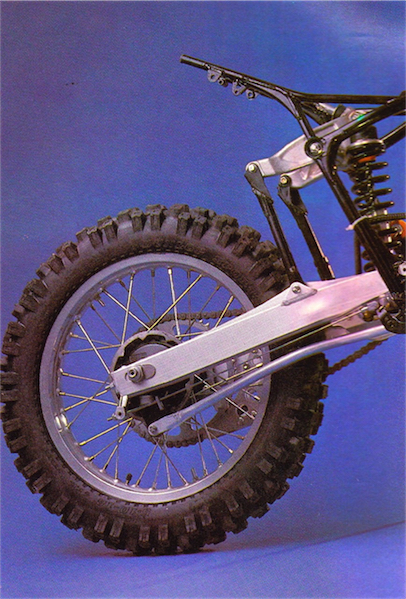
In 1981, Suzuki took the next leap in suspension performance by unveiling its first rising-rate single-shock suspension system – the Full Floater. The Full Floater used a bell-crank arrangement with two pull rods attached to a linkage to compress a single shock from both above and below. The Full Floater name was derived from the fact that the shock was mounted to a linkage at both the top and bottom and was thus “full floating”. The performance of this new suspension design was remarkable for the time and testers came away dazzled with the Floater’s ability to absorb bumps and jumps. It was the best suspension of 1981 by a wide margin and helped propel the ’81 RM250X to the head of the pack.
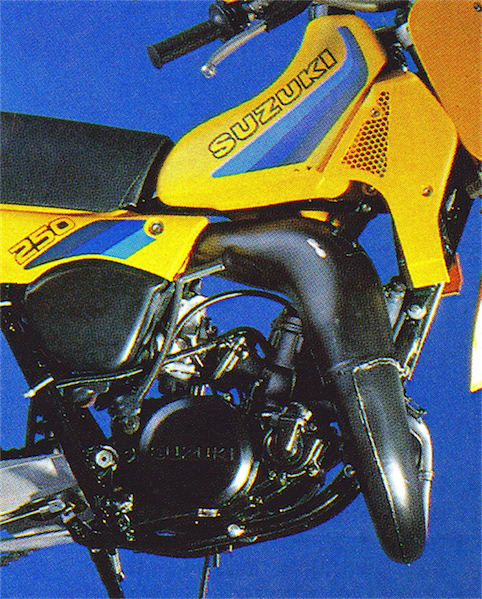
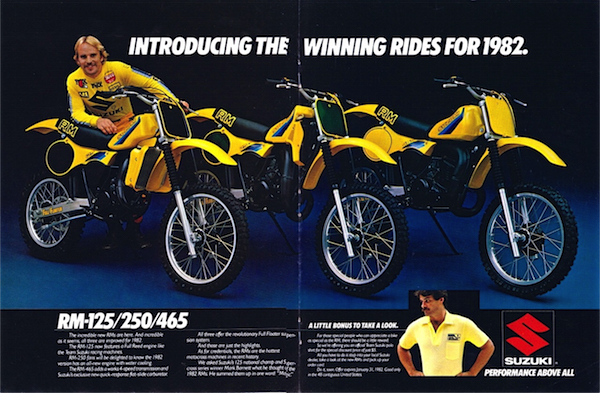
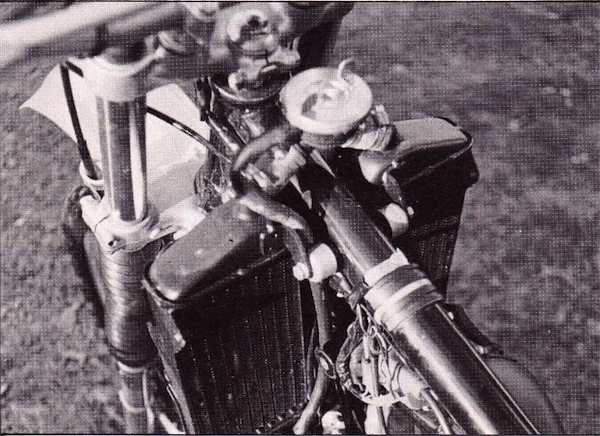
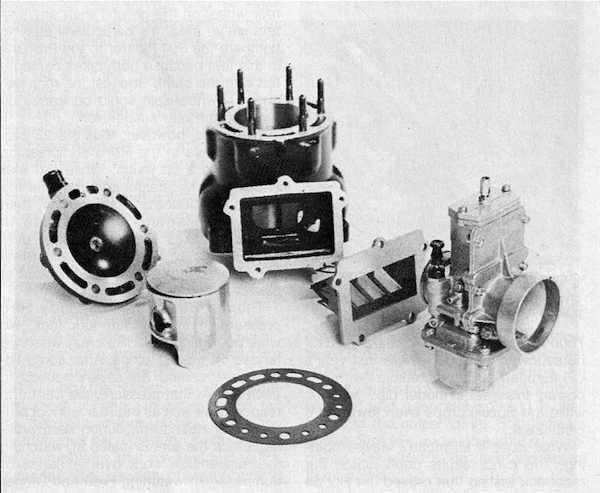
For 1982, Suzuki built on the momentum of their class leading suspension by spec’ing an all-new motor for their quarter-liter racer. The new mill was a radical departure from the mellow ’81 mill and featured Suzuki’s first usage of liquid cooling on a 250cc machine. The all new 70 x 64mm power plant offered a longer stroke than ’81 and bumped up the compression from 8.1:1 to 8.4:1. While it was an all-new design, it retained Suzuki’s unique semi-case-reed intake and mated it to a 38mm Mikuni “flat-slide” carburetor. This new mixer was a big deal in ’82, as it marked the first application of this all-new design. According to Suzuki, the new rectangular slide provided both superior sealing and more even air velocity through the carb’s venturi. Feeding the carb was the same unloved double filter arrangement that had complicated servicing the year before. A new center port exhaust (a first for the RM250) and a redesigned pipe and silencer finished off the motor package
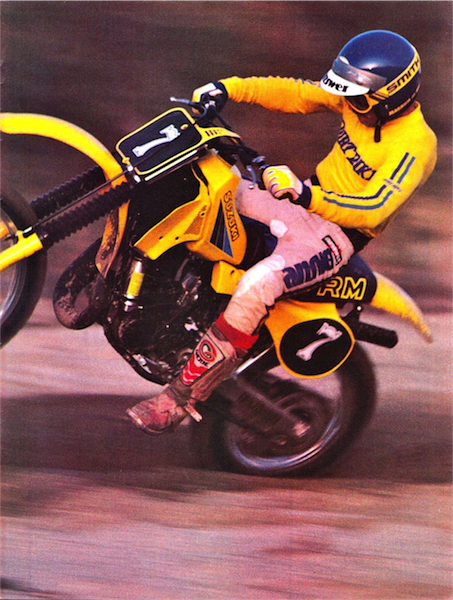
In the chassis department, the new water-cooled Z-model retained largely the same dimensions as the outgoing air-cooled X-model. Both bikes shared the same 57.5-inch wheelbase, with the new machine offering slightly less trail (29.3 degrees for the Z vs. the X-model’s 29.5 degrees). The new frame was both lighter and stronger than the ’81 version, with the high strength chrome-molly tubing being trimmed in some areas and beefed up in others.
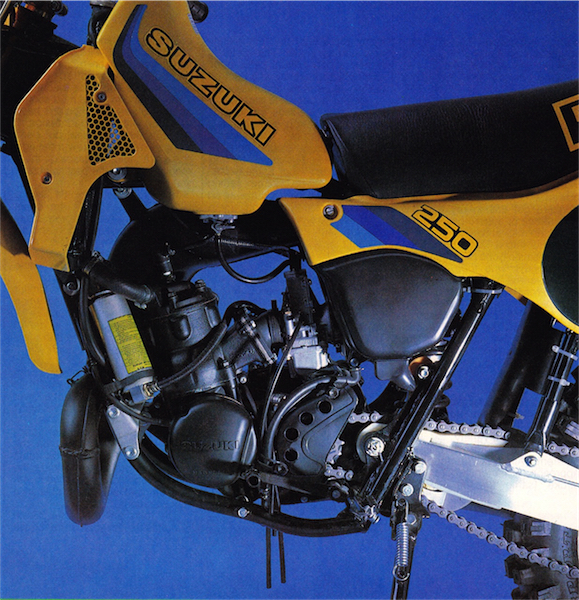
For 1982, nearly every part of the RM was placed on a diet. Every piece of plastic was shaved down to be as light and thin as practically possible. Engineers milled and hollowed out every bolt and part they could think of to shave an ounce or two. Both the shock and forks were lighted for ’82, with the forks maintaining a very old school 38mm size in an effort to undercut the weight of the competition. The result of all this care was a featherweight 214 pounds. This made the RM the lightest bike in the class by a wide margin (A full 6 pounds lighter than the next lightest air-cooled KX250 and a whopping 21 pounds lighter than the porky YZ250!) and actually undercut its air-cooled predecessor by 2 pounds.
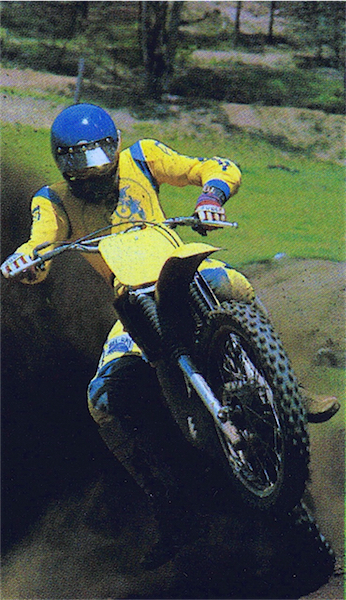
On the track, the new RM250Z was an absolute XM missile. It offered both the most power and the least weight of any machine in the 250 class. Power was extremely explosive and fast revving, making it a handful for the inexperienced. Off the line, the RM was nothing special, with little appreciable power below the midrange. Once it climbed on the powerband, however, it was best to pucker up and hold on tight. Midrange power was particularly potent and followed by a streaking top-end that never stopped pulling.
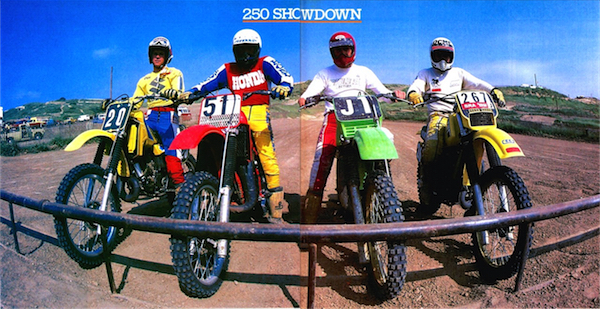
On the track, yellow screamer was far and away the best pro motor of ’82. It just kept pulling and pulling until every other 250 was left in its wake. When Dirt Bike tested the stock RM in ’82, they proclaimed it as fast as any works bike they had ever ridden. While its prodigious power made it a favorite of the fast guys, its lack of low end and violent hit made it intimidating for novices. For them, the excellent low-to-mid power of the CR250R was a better choice.
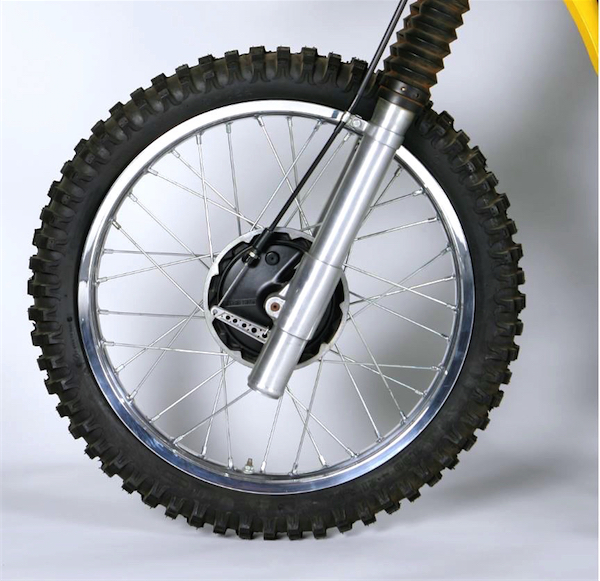
In the suspension department, Suzuki made some interesting choices for 1982. First and perhaps most puzzling, was its decision to eschew the current trend toward bigger and bigger forks and stick with a set of spindly 38mm legs for the RM-Z. By 1982, most manufacturers had moved on to 41mm and even 43mm legs for their full size machines. This provided much less flex and better steering feel in the corners and under braking.
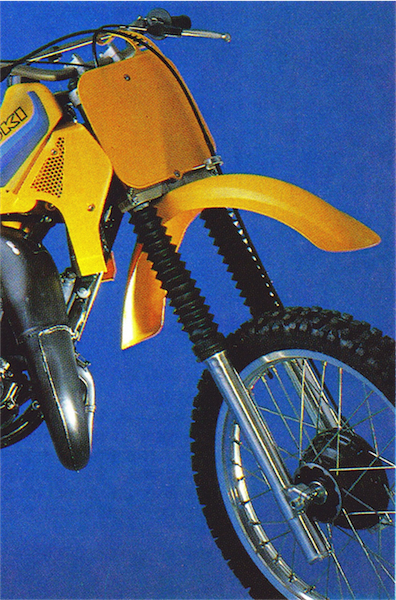
By sticking with the 38mm tubes, Suzuki chose weight over strength in 1982. Their engineers believed that they could get the same level of accuracy, without the weight penalty, by using a unique double walled stanchion on the bottom of the RM’s forks. In practice, however, this idea proved to be less than ideal.
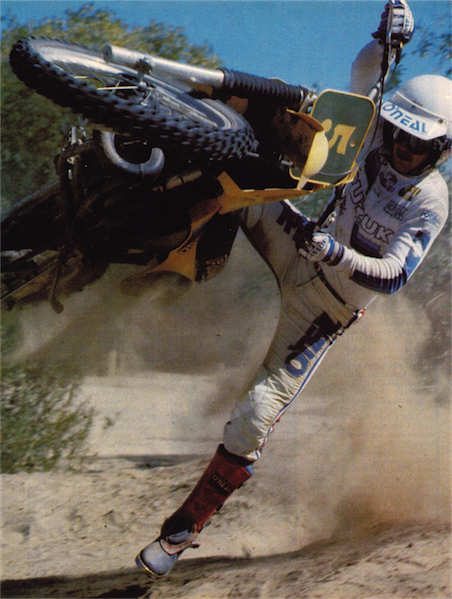
On the track, the RM’s forks exhibited noticeably more flex than the 43mm competition. This gave the front end a vague feel under braking and less accuracy under heavy loads. Travel was competitive at 11.2 inches, but both the damping and spring rates were too light to provide proper control. In stock condition, they dived badly under braking and bottomed with a THUD on hard hits. By adding 7-10 pounds of air to each leg, some of that could be alleviated, but the performance was never going catch that of the other three 250’s.
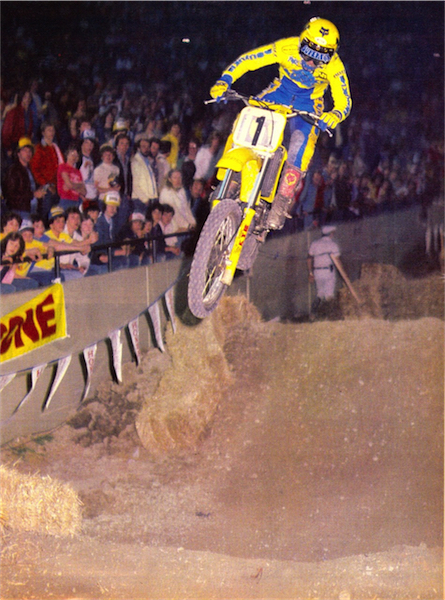
Out back, the picture was much better with Suzuki’s revolutionary Full Floater single-shock rear suspension. In the rough, the Floater had no peers and could be plowed into obstacles that would leave the other brands floundering. Big-hit absorption was the best of the field and the RM craved to be ridden aggressively. For slower and less aggressive riders, the Suzuki could seem a bit stiff and unforgiving, but for fast guys, the RM was King.
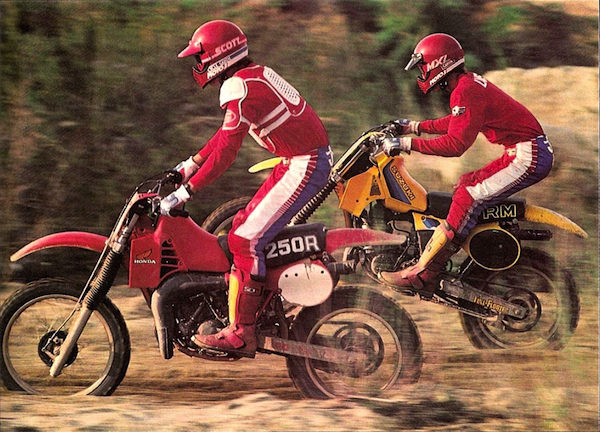
In the handling department, the RM was the king of the inside line in 1982. Its soft front suspension helped the bike take a set in corners and no other bike was capable of carving under the lightning-fast Zook. At speed, the bike could be a handful and the headshake was bad enough to require a Hail Mary or two prior to setting off. The bike’s suspension imbalance only exacerbated this problem and made high-speed runs on the RM a terrifying experience. It was best to wear clean shorts if any fifth gear straights were in your future.
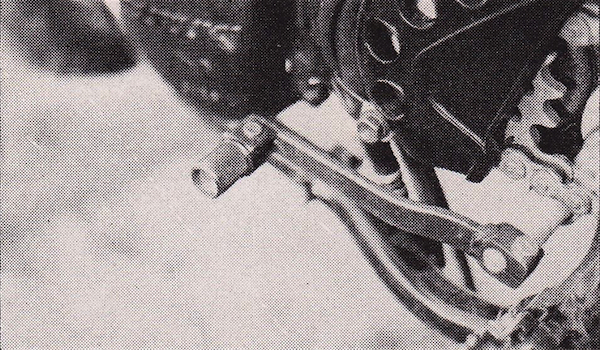
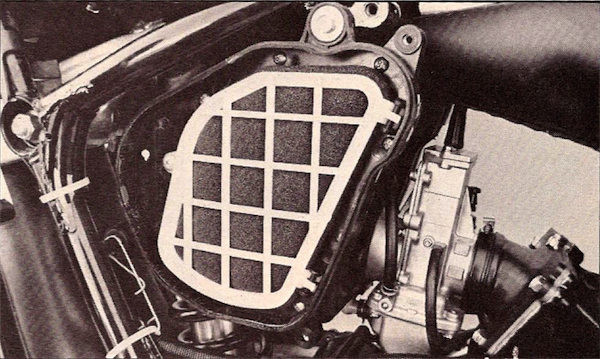
In the detailing department, the RM was pretty par-for-the-course for 1982. Both shifting and clutch life were good and the addition of a folding shifter was a welcome addition. The new bodywork was well liked and the overall ergonomics were considered quite good for the time. Riders loved the Z-model’s low seat height (and much less tear-prone new seat), but were less enthusiastic about its leg-roasting stock pipe. Braking performance was likewise panned, with the RM offering the least pucker power of the Big Four. Servicing the airbox was a particularly infuriating affair, with two filters to clean and an inscrutable amount of mismatched bolts and screws to be dealt with. This was still a major problem among all the brands in ’82, but Suzuki was the worst offender in this fastener roulette.
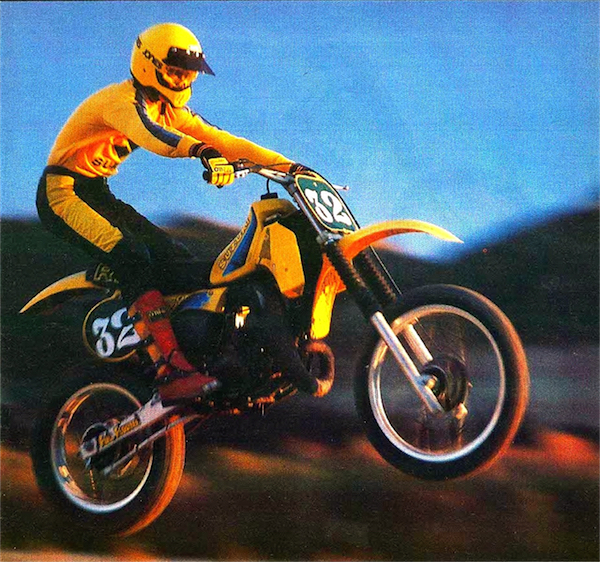
In 1982, Suzuki unleashed a pro-oriented weapon on the 250 class. It was feather light, hard hitting and blessed with the best rear suspension ever to grace a deuce-and-a-half racer. It was a hard-edged and unforgiving, but up to the challenge if you had the skill to make the most of its potential. For aspiring Mark Barnett’s, there was no better choice than the RM250Z in 1982.
For your daily dose of old-school moto goodness, make sure to follow me on Twitter and Instagram -@TonyBlazier
This story first ran in my Classic Steel column on PulpMX. Read the original at PulpMX.com.