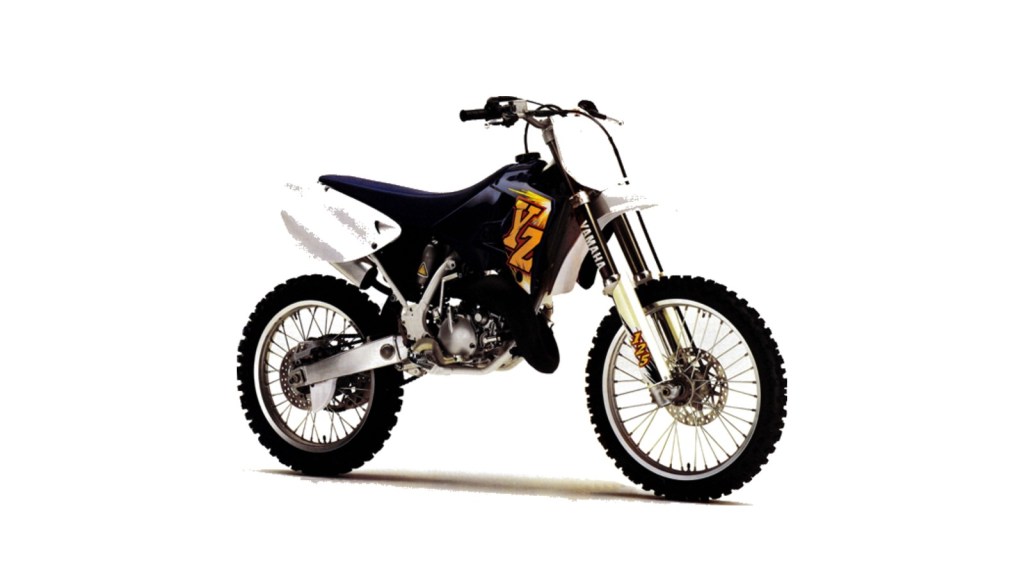
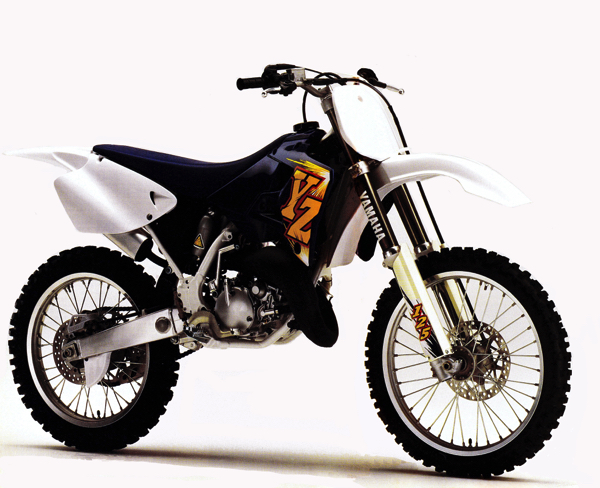
For this weeks GP’s Classic Steel we are going to take a look back at the 1996 Yamaha YZ125.
Today, the Yamaha YZ125 is one of the few 125 two-strokes still left in production. It is a holdout from another era, when bikes were light, simple and easy to work on. When the sweet smell of castor oil tinged the morning air and the song of tapped out 125’s resonated through the tracks of America. It was a time when momentum and corner speed were King, and laziness was penalized with bog and a ticket to the back of the pack.
Over the last decade and a half, the YZ125 has consistently been one of the best 125’s money could buy. Even in the halcyon days before invasion of the thumpers, the YZ was the top bike in a very competitive field of 125 two-strokes. In spite of the basic design being more-or-less a decade old (BNG and plastic surgery aside), it can still hold its own against much newer competition from KTM/Husqvarna. It is a solid bike, with a great chassis and fantastic suspension that continues to be competitive today.
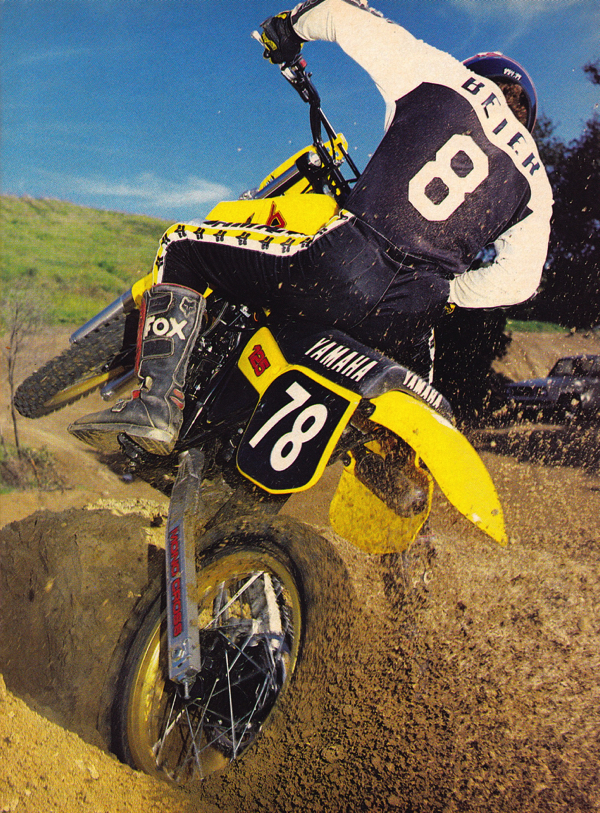
Perhaps the most remarkable thing about how great the YZ125 has been for the last 18 years is how bad it was for the two decades before that. Prior to 1996, the Yamaha YZ125 was more-or-less the whipping boy of the 125 class. After a strong showing in 1976, the little Y-Zed struggled to crack the top step of the podium. In the late seventies, it played second fiddle to the remarkable RM125. Then in the early eighties, the YZ plummeted to the bottom of the field with poor designs and anemic motors. Magazines compared its performance to a riding lawn mower and, offered that the tank was better suited to dog biscuits than race fuel.
In the late eighties, the YZ125 would make a renewed push with a new case-reed motor and revised chassis. The new bike was moderately fast, but held back by a narrow power spread and atrocious gearbox. By the early 1990’s, the YZ was once again in the powerband doghouse, with by far the worst motors in the field. The YZ was so slow it was incapable of outgunning a good running 80 and riders stayed away from the Yamaha 125’s in droves.
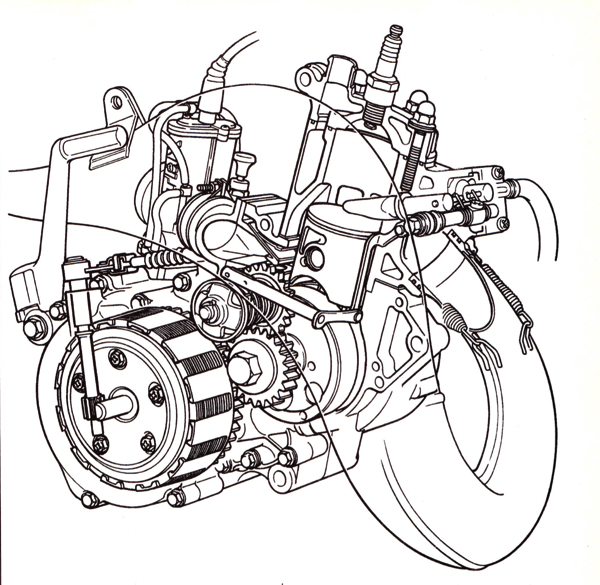
In 1994, Yamaha would finally show they actually had a pulse with an all-new YZ125 mill. The new motor did away with the original “drum-style” YPVS mechanism first employed on the 1982 YZ125 and replaced it with a design similar to Suzuki’s second generation ATEC. The new power valve design employed a set of guillotine-style valves that slid up and down based on engine rpm. By opening or closing these valves, the YZ’s engineers were able to alter the exhaust port timing for a wider spread of power. While this was similar in theory to the original YPVS, the new system offered better sealing and tighter tolerances for increased performance.
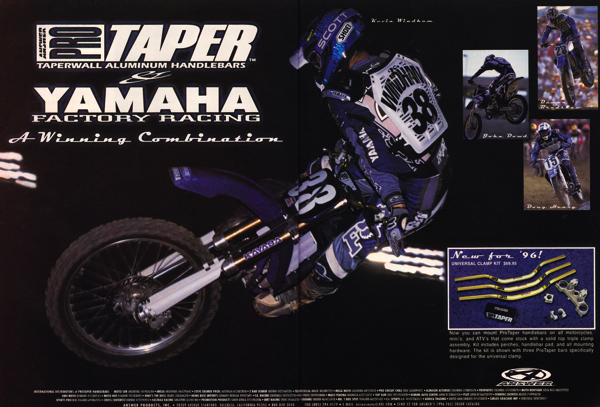
While this new motor was a major step in the right direction, it was still not enough to power the YZ125 to the front. The new mill improved on the previous DOA Yamaha powerband, but the new YZ still suffered from the same issues it had since Jimmy Carter was in office: notchy shifting and a complete lack of top-end pull. In a class dominated by the endless rev of the Honda CR125, the YZ’s short-winded powerband was a considerable handicap. If Yamaha was ever going to reclaim the top spot in the 125 class, it was going to have to find a way to make their buck-twenty-five racer run with the Little Red Express.
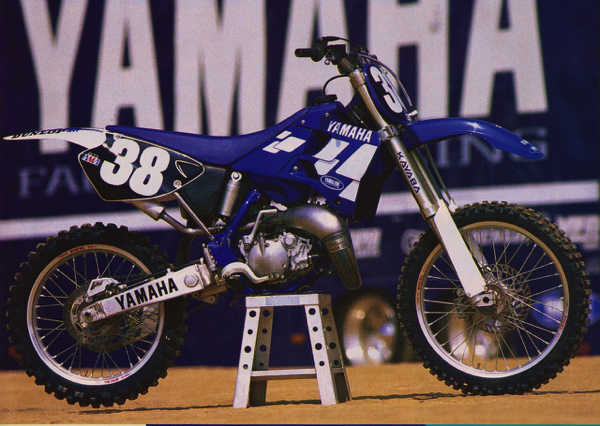
For 1996, Yamaha did more than tweak their 125 racer, they literally threw out everything above the axles and started out fresh. An all-new chassis shortened the wheelbase and adjusted the weigh bias forward for better traction. New forks increased rigidity and an all-new rear suspension design looked to address complaints about the ’93-’95 YZ’s droopy rear end. In addition to the new chassis, all-new bodywork freshened the YZ’s looks and greatly improved ergonomics. Last and not least, a slew of motor changes aimed to smooth out the YZ’s stubborn shifting and broaden its narrow powerband.
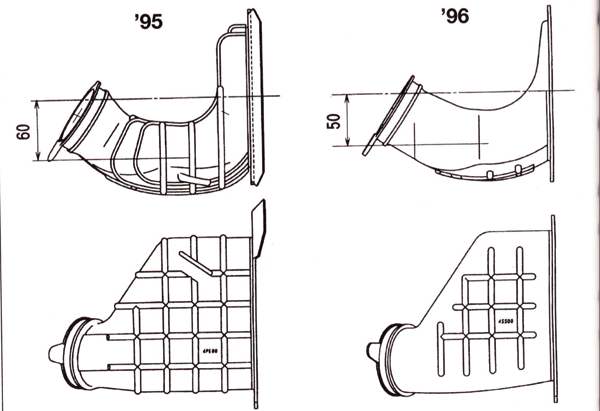
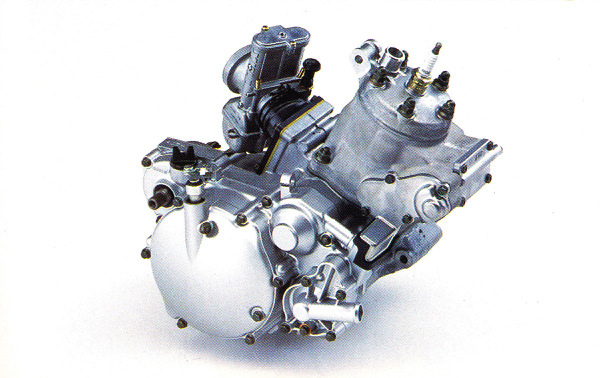
In the motor department, Yamaha retained the same basic design they had used the previous two years, but made several important changes to increase performance. First up was a redesigned crank that decreased crankcase volume for more primary compression and better low-end torque. To increase top-end performance, the YPVS valves were massaged for better sealing and widened by 2.5mm. Secondary compression was also lowered from 9.2:1 to 8.5:1, and the ignition timing was retarded slightly from 1995 to allow freer revving on top. A new piston was both stronger and lighter (by 18 grams) and fed by a set of carbon fiber reeds that drew fuel from a 36mm Mikuni TMX flat-slide carb. In the transmission, new shift forks yet again promised to sort out the infamously tricky Yamaha third-gear upshift. Last, but not least, was an all-new airbox that moved the shock 10mm to the right for a straighter intake tract and increased flow.
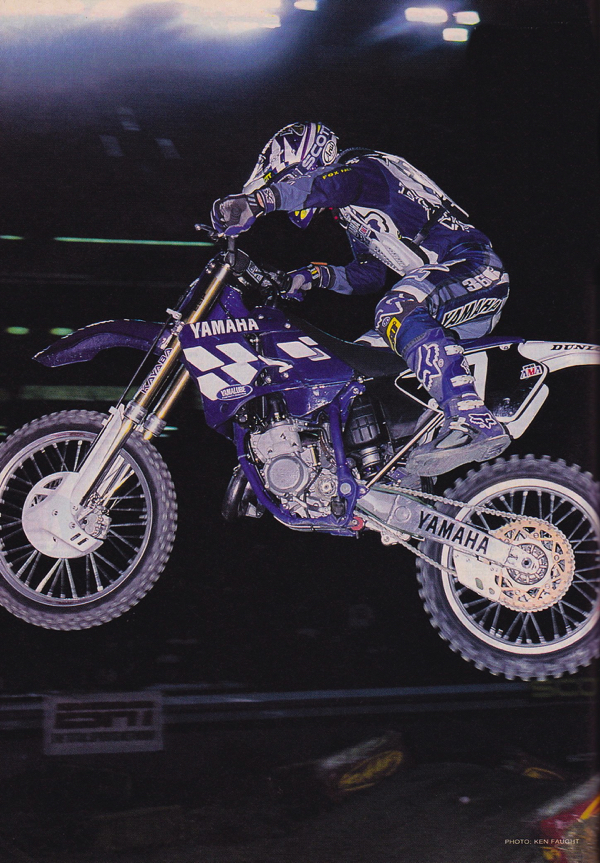
So what was the result of all this engineering trickery? Only the best 125 power plant in Yamaha’s history. In short, the new YZ125 was an absolute revelation in 1996. After two decades of abject mediocrity, the YZ was finally fast! And it was not just fast; it was also broad, torquey and easy to ride. Over the years Yamaha had been able to make a few fast YZ125’s, but they had always been long on punch and short on pull. They hit hard, turned over quick and then hit the wall. While the CR125R rider was pulling to the next turn, the YZ pilot was stuck trying to snag the next gear (no easy task with its notch gearbox). All that changed for 1996.
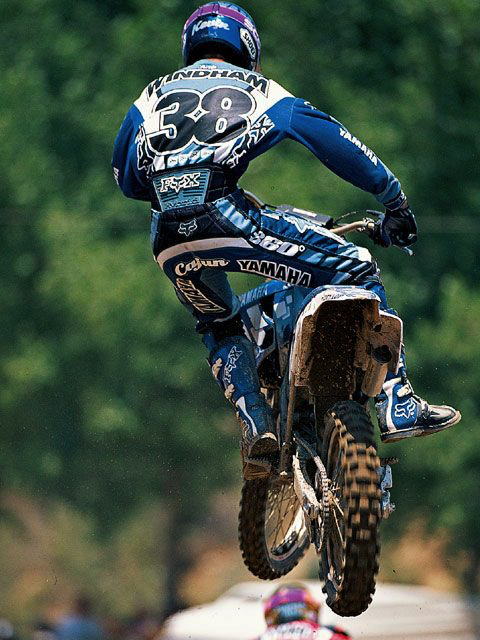
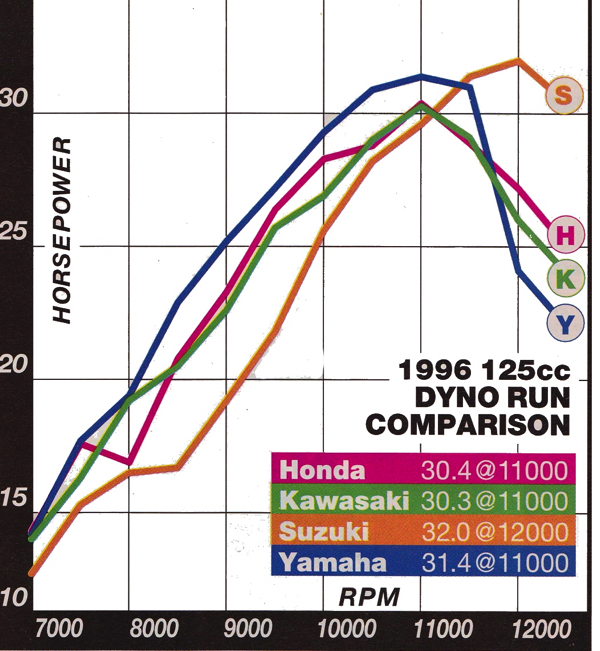
The new blue YZ pumped out a super wide, almost 250-like spread of power. Torque off the line was excellent and followed by a strong mid-range blast. Top end power was solid and strong, but not as eye-watering as the shrieking Honda CR125R. The YZ did its best work in the middle, but it was happy to be torqued or revved, as conditions warranted. It was capable of pulling the next gear when short-shifted and offered by far the widest power spread in the 125 class. From 7000 rpm to 11,000 rpm (the bread and butter of a 125 power curve) the Y-Zed smoked the competition, pulling out as much as a three horsepower advantage. It was only at the rev limiter where the YZ gave way to the competition. In 1996, this was the ultimate 125 motor.
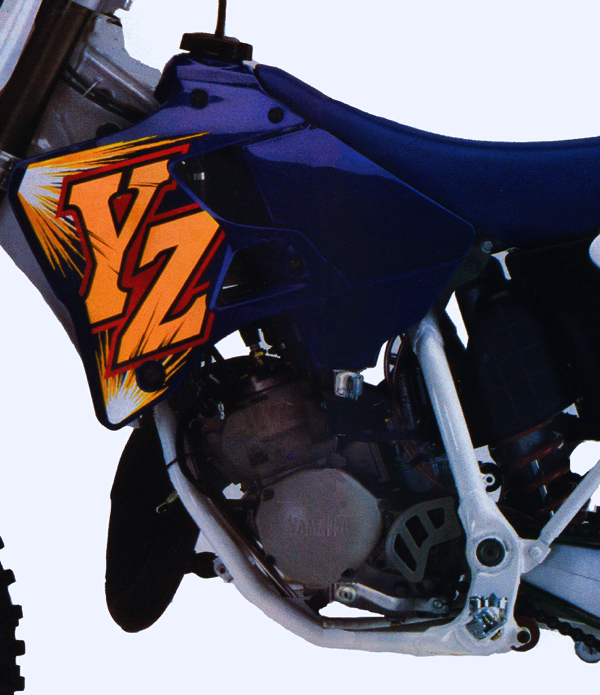
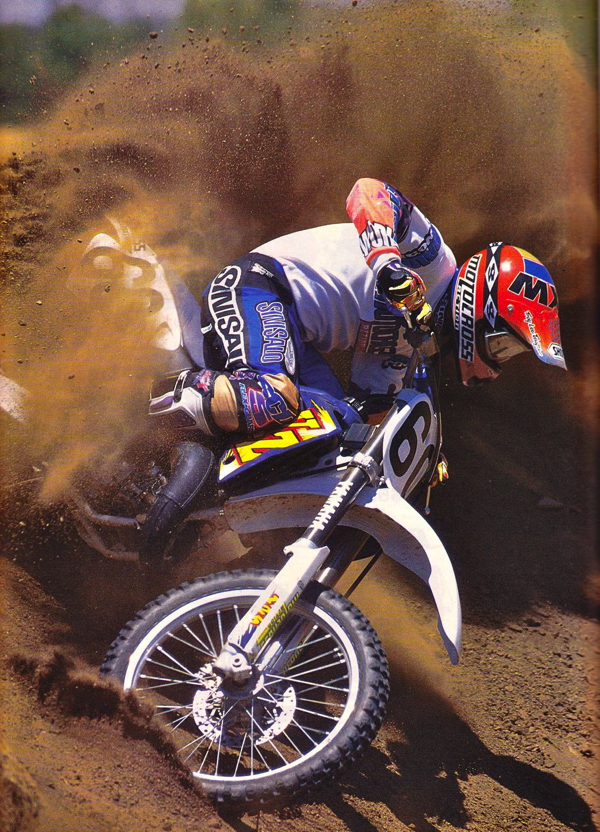
In the suspension department Yamaha spec’d an all-new set of forks for their eight-liter racer. In 1996, the return to conventional forks was all the rage, and both Suzuki and KTM garnered praise for their ultra-plush conventional sliders. At the time, the jury was still out on what which configuration was the best design. For 1996, Yamaha went the opposite route and actually aimed for increased rigidity in their front end. A new Kayaba fork increased the diameter of the tubes from 43mm to 46mm. This added rigidity and made additional room for a larger cartridge, base valve and mid-valve damping unit. Also adding rigidity were new double-pinch bolt axle clamps, more overlap area on the triple clamps and a larger diameter front axle.
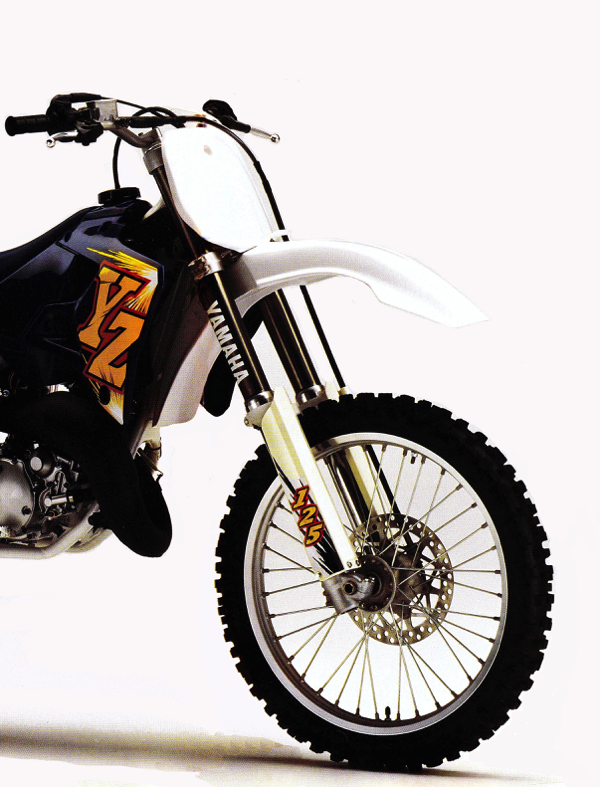
In terms of performance, the YZ’s forks were excellent for light riders, but too soft for heavy or fast pilots. With the stock springs installed, the forks would bottom easily on sky shots and hard hits. For fast guys, a step up in spring rate was mandatory. Damping was well controlled and most pilots found it easy to dial in the ride with the available adjustments. With the addition of the stiffer springs, the YZ offered the second best front end in the class, behind only the ultra-plush conventionals found on the RM125.
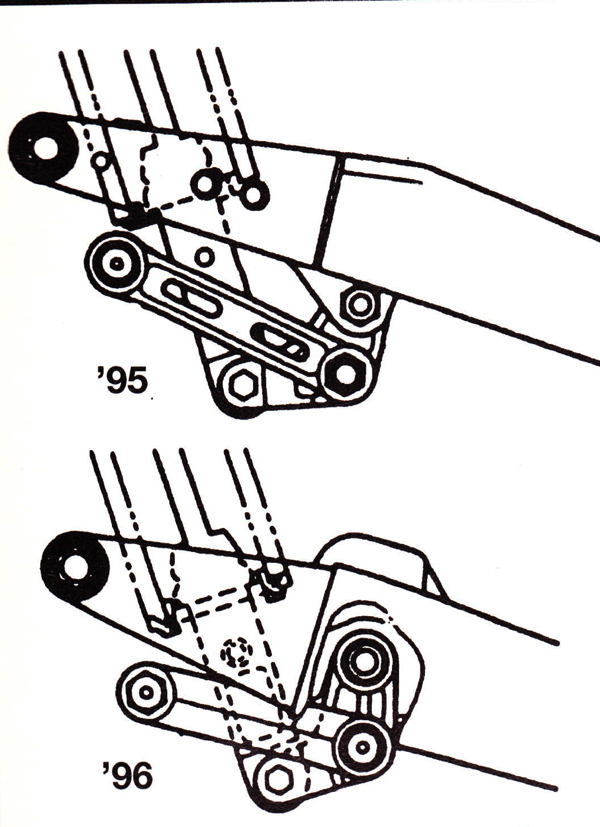
From 1993 to 1995, most riders found the YZ’s rear end raceable, but not loveable. Many riders complained about the stock linkage’s tendency to hang down in the stroke and bang into the aggressive part of the curve on medium-size hits. For many riders, the fix for this was to swap out the stock linkage for a Noleen or DeVol link. These aftermarket solutions offered a revised rising rate that prevented the rear of the bike from hanging down under acceleration.
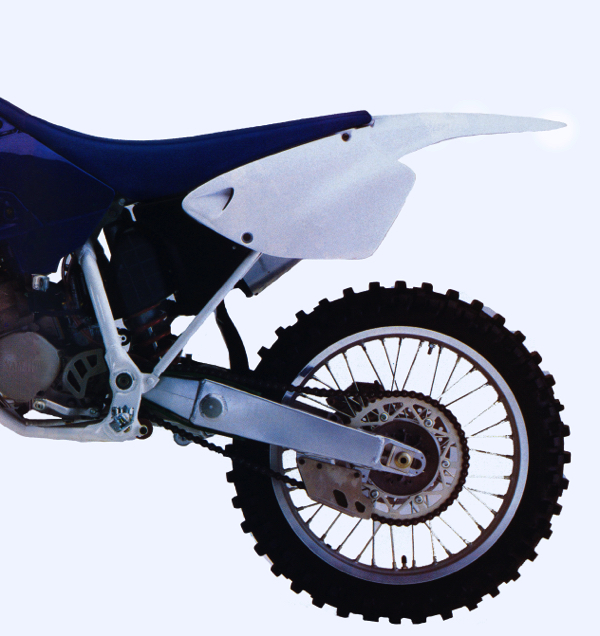
For 1996, Yamaha addressed these complains with an all new rear suspension design. The new Monocross moved the pivot point from below the swingarm to the mid-point of the swingarm (ah la Honda). A new larger and stronger swingarm was spec’d and bolted to an all new linkage that started off stiffer in the first four inches of travel before mimicking the ’95 for the remainder of the stroke.
On the track, the new Motocross offered one of the smoothest rides of 1996. Action was extremely plush and YZ soaked up small and medium sized hits without a whimper. As with the forks, a step up in spring rate was advised for fast guys to prevent bottoming on mega leaps. Without the spring swap, the rear of the YZ would bottom the easiest of the Big Four 125’s. With an upgrade to the spring, the YZ jumped right back into contention with a plush feel and controlled ride. Overall, it was selected as the best rear end for light guys, but rated as too soft for heavier or faster pilots.
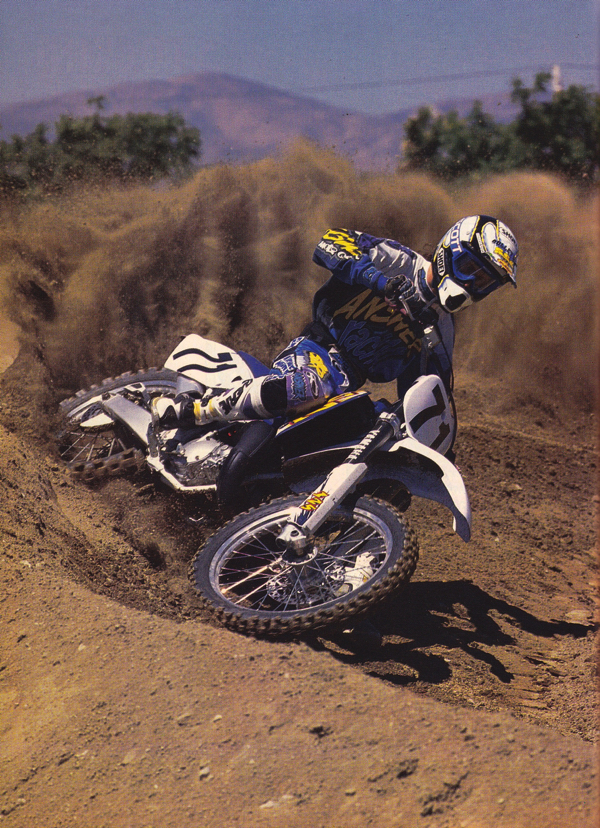
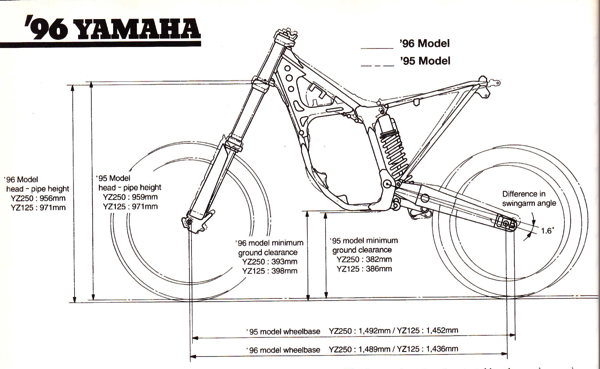
For 1996, Yamaha scrapped the chassis design it had been using since 1993 and spec’d out an all new platform. The new frame offered more rigidity, reduced trail (3mm), greater ground clearance (12mm), a shorter wheelbase (16mm) and a more forward weight bias. New bodywork also aided handling by offering a flatter and slimmer layout that allowed the pilot to move fore and aft with less effort.
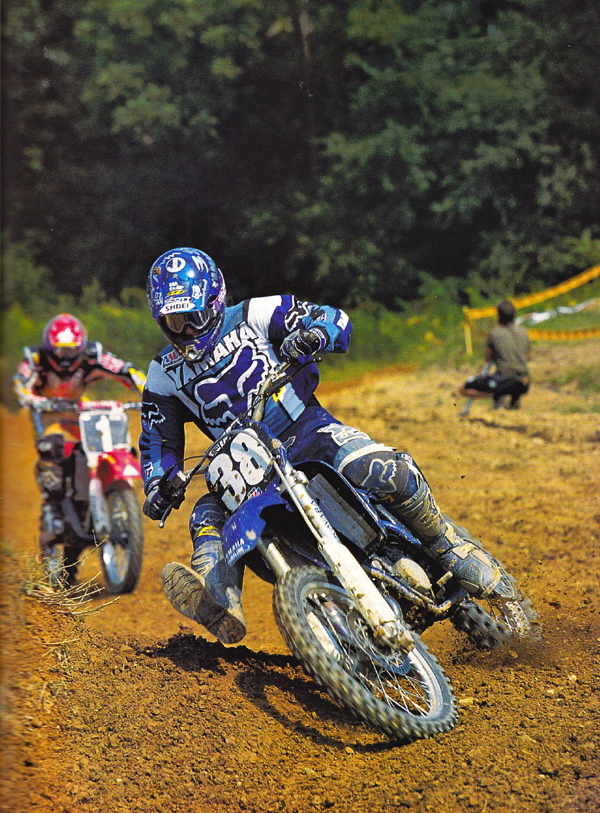
Interestingly, even though Yamaha totally revamped the chassis for 1996, the navy blue YZ ended up handling more-or-less the same as its lightning-bolt emblazoned predecessor. The new bike offered a very balanced and safe handling package, which favored stability over the typical cut-and-thrust 125 schizophrenia. In tight turns, the Y-Zed suffered from a slight push and the bike was extremely sensitive to fork height and race sag. With proper set up, the bike turned well, but the blue bomber was never going to be confused for a RM125.
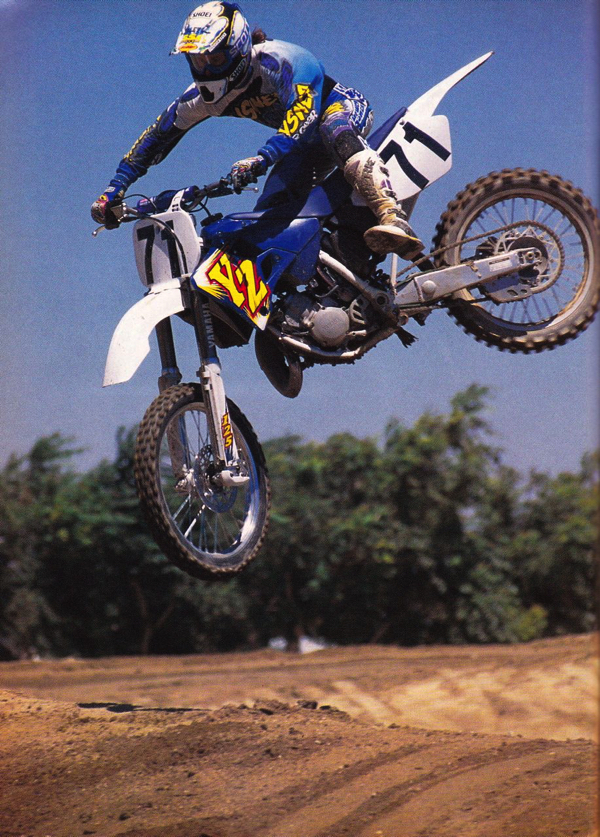
Where the YZ shined was in the sections of the track that had the CR pilot holding on for dear life and checking for a soft place to dismount. In fast sweepers and down rough straights, the YZ was rock solid and confidence inspiring. There was not a hint of headshake in the YZ’s vocabulary and the bike never did anything weird or took its pilot by surprise. Overall, it was a solid package that reinforced the things people liked about Yamaha handling, without doing much to assuage its critics.
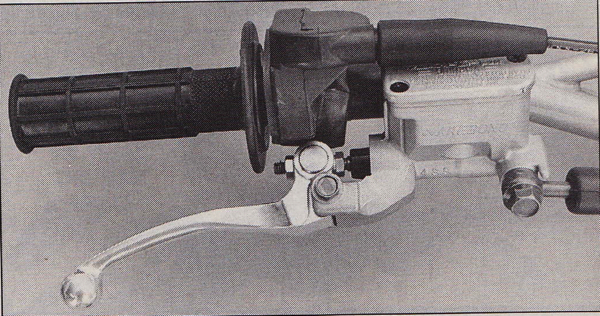
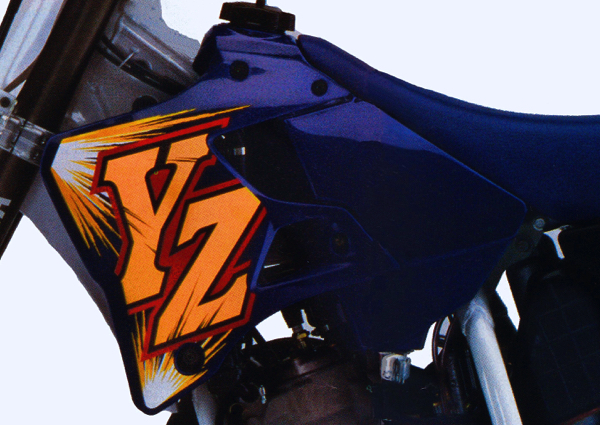
In the details department the new YZ made strides in some areas and took a step back in others. The new Akebono brake components greatly improved power and actually challenged Honda’s brake stranglehold for the first time in a decade. Overall the new bodywork was praised by testers, but some riders (paging Jody Weisel) lamented the demise of the 1995’s integrated hand holds and many others complained of catching their knee braces on the rearmost portion of the radiator shrouds. The stock bars were butter soft and no one much cared for their low and swept back bend (hello Yamaha thumb, my old friend). The new dark blue color scheme was a big change from the lavender and lightning bolts of 1995 and most testers welcomed the new look.
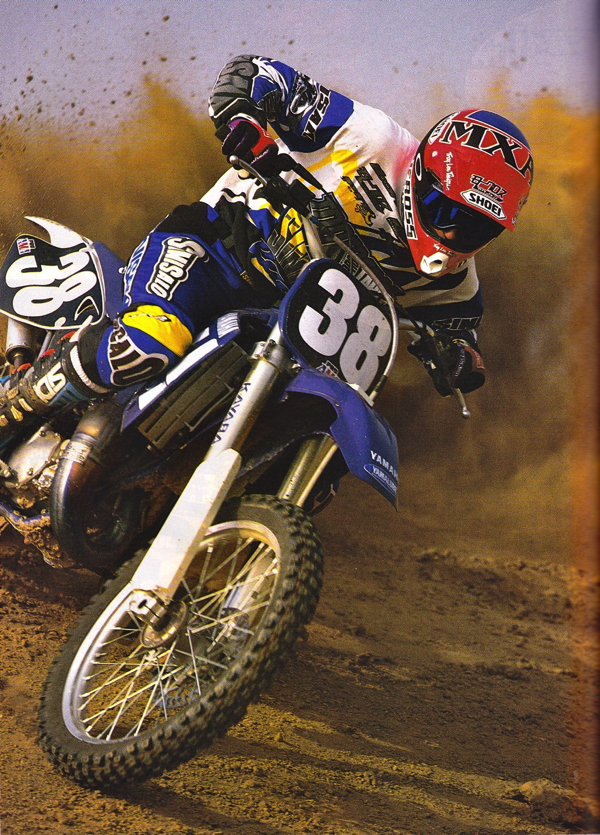
While the new YZ was certainly the best YZ125 in nearly two decades, there were still problems with the all-new design. Top among those concerns was reliability. In a class where the bikes are ridden hard and put away wet, this was a major concern and the new YZ turned out to be the least reliable of the 1996 125 crop. The largest problem turned out to be the new cog box; which improved shifting slightly, but had an annoying habit of snapping gear sets. Both MXA and Dirt Bike Magazine blew the trannies of their test bikes and countless riders reported similar failures.
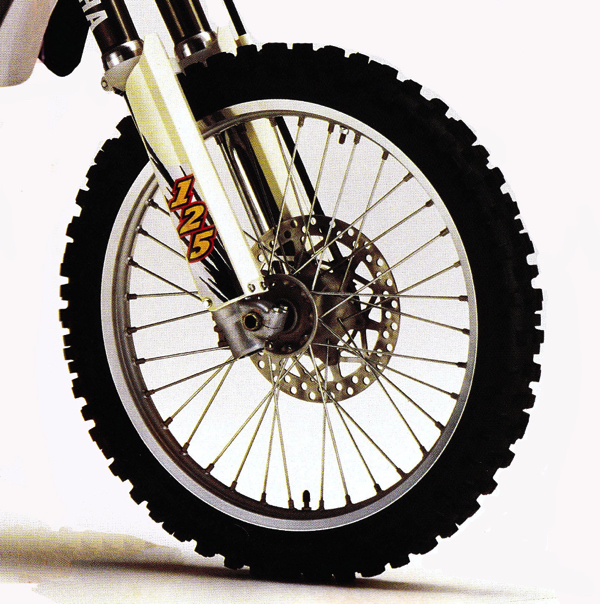
The YZ’s stock wheel sets also turned out to be a major problem and broken hubs were a common occurrence. While annoying, this was fairly easy (if costly) to fix and certainly easier to address than exploding gears. Overall, the YZ was much improved, but far from perfect.
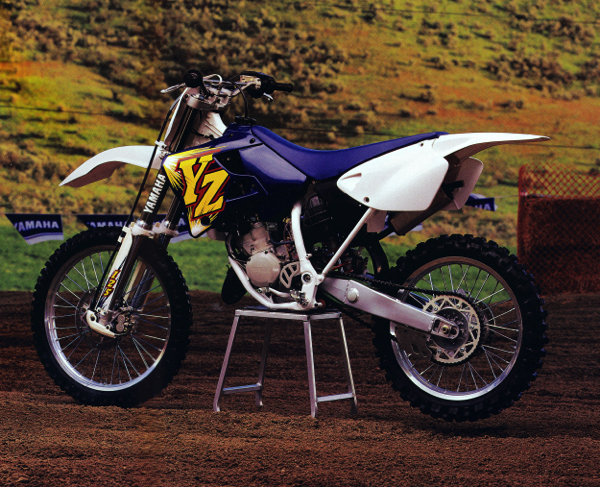
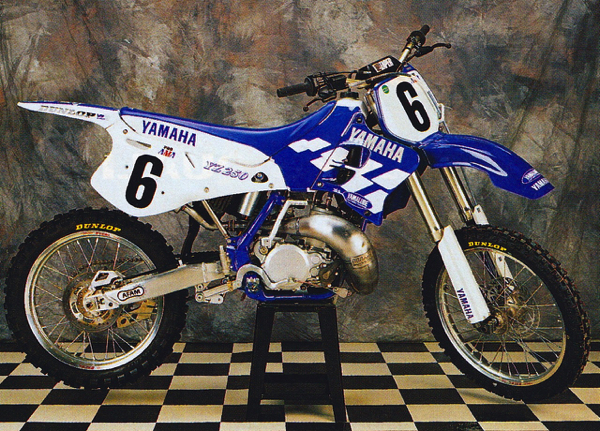
In 1996, Yamaha put a decade and a half of utter futility in the rear view mirror with an all-new YZ125. The new bike barked like no YZ125 in history and powered Yamaha to the front of the class for the first time since 1980. While it still had a few rough edges that needed attention, it shined in the only area that really mattered in the 125 class – horsepower. The 1996 YZ125 would signal a paradigm shift in the power structure of the 125 class. The new YZ would quickly turn the 125 class from red to blue, and finally put an end to a decade of Honda dominance. From 1996 until the unofficial demise of the class in the late 2000’s, there would be no better 125 that the Yamaha YZ125, and that run of success starts right here.
For your daily dose of old-school moto goodness, make sure to follow me on Twitter and Instagram -@TonyBlazier
This story first ran in my Classic Steel column on PulpMX. Read the original at PulpMX.com.