A lot of guys my age learned to race on a Yamaha YZ80, and a lot of them are now looking for one, either to restore for the shelf or to put their own kid on. Yamaha built the YZ80 from 1974 until the YZ85 replaced it for 2002. In that time it went from a mild 72cc air-cooled mini to a liquid-cooled racer with inverted cartridge forks. That’s a big spread, so here’s how I’d shop for one.
Found one for sale? Send me the listing before you buy → Bike Check
I’ll look over the photos, numbers and price and tell you what I see. Starts at $29.
The short answer: which years to buy
- For the ’80s look and an easy motor: 1986–1990. The 1986 update brought a long-rod motor with tons of low end, a twin-piston front disc and an alloy swingarm. Both Motocross Action and Dirt Bike rated its rear suspension the best in the 1986 mini class. My 1986 Yamaha YZ80 review covers that bike in detail.
- For riding: 1993–2001. The all-new 1993 YZ80 was a big leap: a bigger, stronger frame, a removable subframe, 36mm inverted cartridge forks and a fully adjustable KYB shock. It had the best suspension in its class.
- Think twice: 1985 and earlier, if you want to ride it hard. The 1985 bike still had drum brakes, a steel swingarm and 33mm forks, and by then the design was a few years old. It’s a great restoration, but it’s not the bike to race.
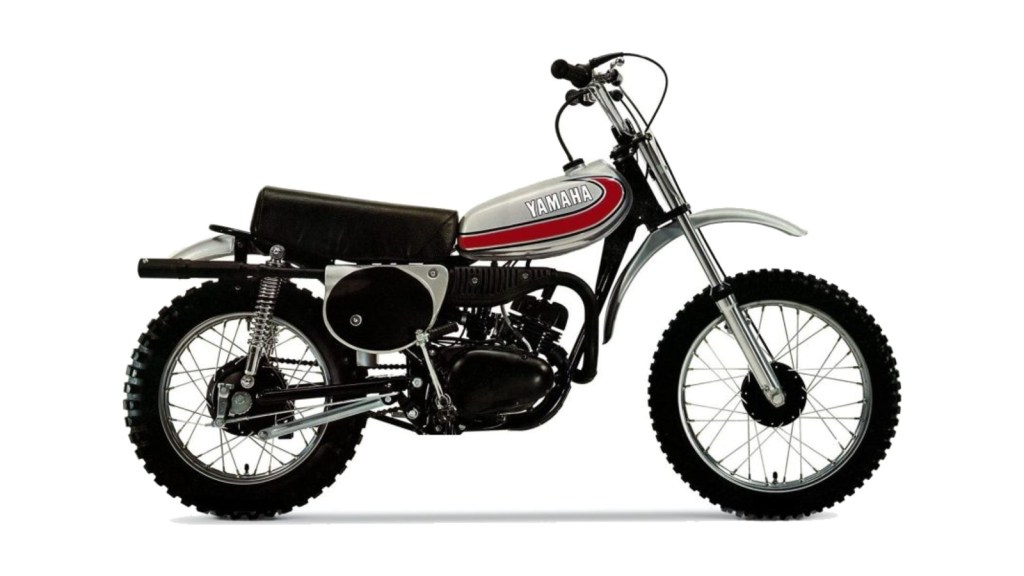
- The collector’s picks: the 1974 original with its silver and red tank, and the yellow 1975–1984 bikes. Those are the YZ80s I’ve seen bring real money at auction (more on prices below).
Year-by-year changes that matter
- 1974: First YZ80. A 72cc two-stroke developed from the GT-MX, in a very mild state of tune. Stock, it was actually slower than Honda’s four-stroke XR75.
- 1975–1984: Yamaha yellow. Liquid cooling arrives in 1982.
- 1985: White and red. 82.5cc, 33mm Kayaba forks, steel swingarm, drum brakes at both ends.
- 1986: Major update. New crank with a 4mm longer rod, new top end with bigger transfer ports, hotter ignition, a 5 percent larger radiator, bigger clutch, straight-cut primary gears, twin-piston front disc and an alloy swingarm that saved two pounds. Rear brake still a drum. No power valve.
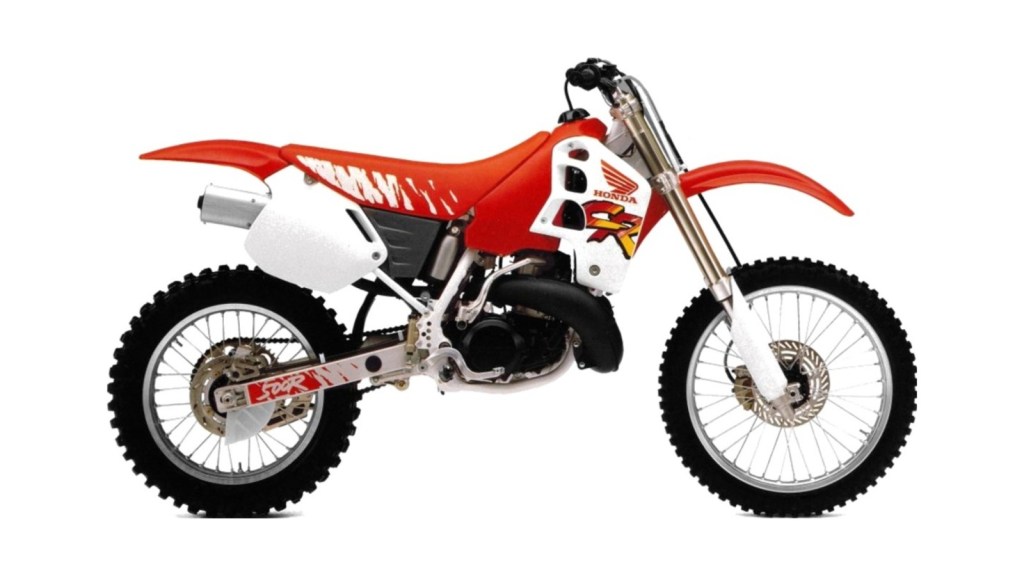
- 1991–1992: White with magenta graphics, still on conventional forks.
- 1993: All-new YZ80: bigger frame, removable subframe, 36mm inverted cartridge forks, fully adjustable KYB shock, case-reed 82.9cc motor, low-boy pipe and alloy silencer.
- 1994–1995: Purple and yellow graphics on white.
- 1996–2001: Yamaha blue, still called the YZ80.
- 2002: The YZ85 takes over.
Every model year is in my Yamaha YZ80 and YZ85 history, with the brochure photos and the video version on my YouTube channel.
Common problems and weak points
A kid’s life. Nearly every YZ80 out there was raced, crashed and handed down. Check the frame, pipe and bars for crash damage, and ask when the top end was last done. The motors are tough if they were maintained: clean air filter, good oil and regular top ends.
Soft forks on the 1986–1992 bikes. The 33mm Kayabas had only 10 inches of travel, the least in the 1986 class, and no damping adjusters. They were set up for light, slow riders and bottomed with a clank when pushed. Plan on springs and fresh oil if a bigger or faster kid will ride it.
The gearbox. The YZ80’s six-speed was the notchiest in the class in 1986, and it still had the worst shifting in the class in 1993. Some of that is just how they were, but a box that won’t find gears at all needs a closer look.
Chain adjusters and the chain guide on the ’80s bikes. The stock steel chain adjusters on the 1986 were flimsy and bent easily. Once they bend, the wheel goes out of line, the chain can come off, and a thrown chain can break the cases. The plastic chain guide bent easily too. Look closely at the cases behind the countershaft sprocket.
The rear wheel on 1993 and later bikes. The stock rear wheel didn’t like big landings. Spin it and look for a bent rim or loose spokes.
Cheap stock parts. The stock steel bars rarely survived a crash, and the original hardware was soft, so look for stripped bolts and rounded heads, especially on a bike someone has worked on at home.
Size. The ’80s YZ80 was built small, with a low seat and a compact cockpit. That’s great for a kid just moving up, but a taller kid will be cramped on one.
How to spot a correct bike vs a Frankenstein
Minis get swapped, rebuilt and re-plasticked more than anything else, so check the hard parts first and the colors last.
- 1985 vs 1986: both are white and red, but the 1985 has a front drum and a steel swingarm. The 1986–1990 bikes have a front disc and an alloy swingarm. A “1986” with a front drum has the wrong front end.
- 1991–1992: magenta graphics on conventional forks.
- 1993 and later: inverted forks and a removable subframe. Conventional forks on a ’93-up bike mean something was swapped. Purple and yellow on white is 1994–1995, blue is 1996–2001.
- Engine numbers: Yamaha used a model-code prefix on the engine number. One parts-reference table lists 462 for the 1974 YZ80, 1T0 for 1977, 58T for 1985, 1LR for 1986 and 4ES for 1993–2001. Take that as a starting point, not gospel, and compare it against the frame number.
- Frame numbers: on the ’70s bikes I’ve seen sold at auction, the frame number starts with the same code (462 on a 1974, 1T0 on a 1977). If the frame and engine codes point to different years, it’s been mixed.
- Big wheel vs standard: Yamaha also built a big-wheel YZ80 (sold as the YZ80LW in the ’90s). Make sure you know which one you’re looking at, and that it fits the rider.
Original brochures help a lot with the details. Check my 1988 Yamaha YZ brochure, the 1995 Yamaha YZ promotional video and the 1999 Yamaha YZ ad.
What to pay
These are rough ranges from the few public sales I could verify, not a price guide. Most YZ80s change hands locally on Facebook Marketplace and Craigslist, where the sold price never gets recorded.
- A 1976 YZ80 sold at Mecum’s Dallas auction in September 2021 for $3,025.
- A 1977 YZ80D described as highly original sold at Mecum Las Vegas in January 2025 for $6,600.
- Another 1977 YZ80 sold in September 2023 for $9,350.
- At the other end, a 1993 YZ80 on eBay recently ended with no bids at a $1,000 starting price.
So the early yellow bikes in original condition are the ones bringing $3,000 to $9,000 at auction, and an ordinary ’90s rider can sit unsold at $1,000. What moves the price: correct hard parts for the year, original vs restored, a first-year or early bike vs a common later one, and a fresh top end and suspension vs “ran when parked.” If you’re not sure about a price, send me the listing.
Parts availability
The 1993–2001 bikes are the easy ones. Wiseco still lists piston kits and complete engine rebuild kits for the 1993–2001 YZ80, and the OEM parts diagrams for these years are still online, which helps you check part numbers. For the earlier bikes, wear parts are out there, but year-correct original pieces like tanks, shrouds, seats and side panels are harder to find. If you want a correct early bike, buy the most complete one you can find.
YZ80 pre-purchase checklist
- Photos of the frame number and the engine number.
- Hard parts match the claimed year: brakes, swingarm, fork type, cooling, colors last.
- Cold start while you watch, and a ride if you can.
- When was the top end done? Is there a receipt?
- Shift through every gear, and check the clutch.
- Fork seals and tubes, shock body and linkage. Push down on the forks: soft is normal for the ’80s bikes, leaking isn’t.
- Chain adjusters, chain guide and the cases behind the sprocket.
- Spin the rear wheel: bent rim or loose spokes?
- Frame, pipe and bars for crash damage.
- Is it the right size for the kid (or adult) who’ll ride it?
For the full list, see my vintage dirt bike buyer’s checklist. Comparing minis? Read my Kawasaki KX80 buyer’s guide, the Honda CR80R history and the Suzuki RM80 history.
FAQ
What’s the best year Yamaha YZ80 to buy?
For a rider, 1993–2001, with the inverted forks and the bigger chassis. For the classic ’80s look with an easy motor, 1986–1990. For a collector, the 1974 original or a yellow ’70s bike.
What year did the YZ80 get a front disc brake?
1986. It got a twin-piston front disc that year, and the rear stayed a drum.
Does the Yamaha YZ80 have a power valve?
No. No YZ80 ever had YPVS. Yamaha didn’t put a power valve on its mini until the 2019 YZ85.
When did the YZ80 become the YZ85?
For 2002. The 2001 YZ80 was the last one.
How can I tell a 1985 YZ80 from a 1986?
Look at the front brake and the swingarm. The 1985 has a front drum and a steel swingarm, and the 1986 has a front disc and an alloy swingarm.
Found one for sale? Send me the listing before you buy → Bike Check
I’ll look over the photos, numbers and price and tell you what I see. Starts at $29.